












Though key questions about the full game remain.
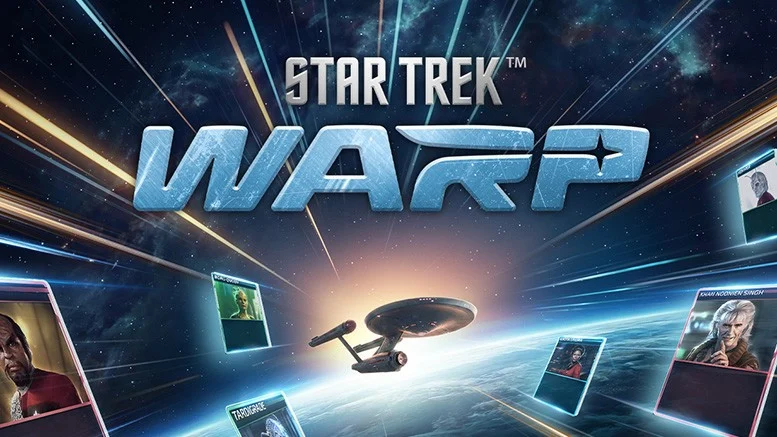
As a lifelong Trekkie with an equal passion for gaming, I keep an eye out for every Star Trek video game on the market. While the franchise is unlikely to ever toss out annual AAA titles like, say, Star Wars, there’s still quite a bit out there for those whose fictional heroes include Sisko and Spock. Enter Star Trek Warp, a free-to-play collectible card game (CCG) coming to Windows PC and Mac via Steam later this year.
For the past few weeks, developer Monumental has given prospective players a fully playable sneak peek courtesy of a downloadable demo, which includes a tutorial and six distinct battles. I’ve spent the past few days familiarizing myself with Warp’s mechanics, and while I do have reservations, I’m largely impressed with what’s on tap.
Unfortunately, Star Trek Warp’s demo starts things off on the wrong foot by providing a five-part tutorial that is, to put it plainly, not especially useful. This teaching tool’s first four phases present remarkably simple examples of Warp’s core concepts — for instance, players are taught how to place character cards on the board and subsequently attack with them, but only one of the game’s myriad key character abilities is explained. Breach, Energized, Cycle, Shielding, Reroute… these are left for us to figure out for ourselves once we dive into actual matches.
To be clear, this is hardly the end of the world. Since the demo is understandably limited in scale, my sense of how each of these abilities function came together naturally, via trial and error. The weaknesses of the tutorial system are mitigated by first-hand experience with the CCG’s already-impressive array of Location cards, Tech cards, and more. But it wouldn’t be a bad idea for Monumental to shore things up before launch so that we don’t feel like we’ve been dropped into the deep end.
Star Trek Warp will offer both PvP and PvE modes, but the demo is confined to PvE. On the one hand, this is to be expected, as once we’re all fighting each other directly, we’ll doubtless uncover all kinds of high-end strategies that risk dominating the game until Monumental commits to rebalancing. The stakes are far lower showing us relatively more predictable AI opponents. That’s all well and good, but it does cloak the publisher’s free-to-play ambitions until further notice.
Already, we can gather three resources: credits, dilithium, and latinum. Much of Warp’s main menu is presently locked, including the missions, packs, and store tabs; experience with free-to-play and gacha gaming structures has me reasonably confident that missions may involve limited-time events, packs will be purchasable for set numbers of those key resources, and store will be, well, a store. How much will we be nickelled and dimed if we want a competitive edge? What’s the going rate for gold-pressed latinum per dollar these days? Time will tell.
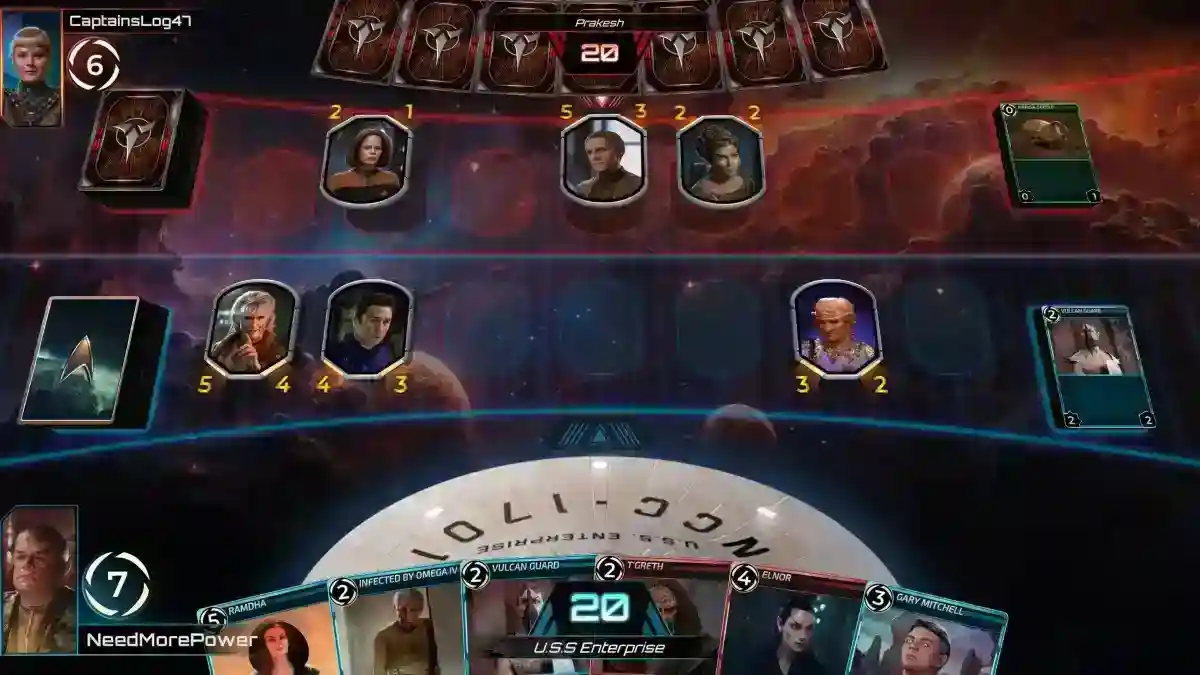
These are significant concerns, but ultimately, this is a demo. Taken on its own terms, underwhelming onboarding process aside, it’s a solid one that has me cautiously optimistic that Star Trek Warp will sport real depth and innovation. Both players have seven slots on their field at all times, and cards can be played upon each slot. (In-game parlance refers to these slots as “warp lanes.”) One cannot just fill their lanes from the get-go, however. Instead, there’s a set amount of energy generated per turn, and most cards cost energy to place on the field.
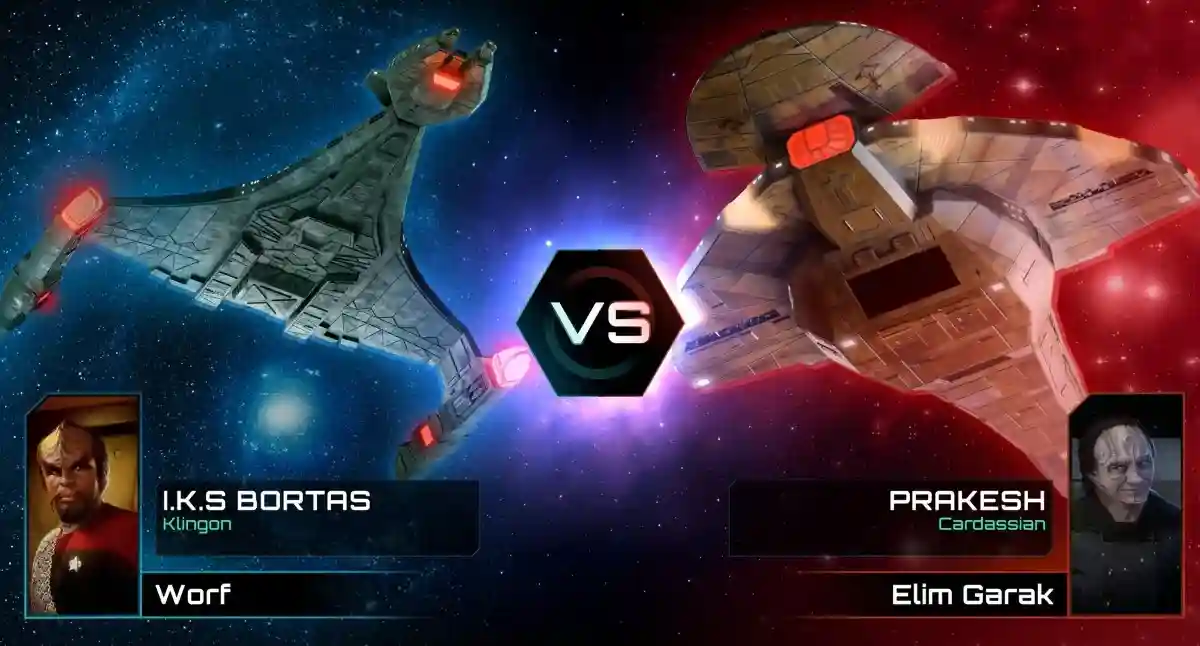
At the start of a match, both players’ ships have 20 health points, and matches end when one of the ships drops to zero. The ships themselves don’t appear to provide unique mechanics, but they’re essentially your decks, and since the demo only provides preconstructed decks, they’re currently pretty unique from one another. How that will shape up at launch remains to be seen.
The tactical elements slowly but surely come into view. Where should your character cards be placed, and when? Characters can only attack enemy lanes ahead of them and to their left or right. Attacking through a lane, which is to say, a lane without a character on it, means striking the opponent directly. Characters also have both attack and defense stats, but more importantly, they have abilities.
Finding the right synergy is paramount to winning battles. Trip Tucker from Star Trek Enterprise can gain bonuses to his stats when he’s played on to a Location. That means you’ll need to draw a Location card, then pay the requisite energy cost to place it, but these are hardly just for Trip’s benefit — an asteroid field, for instance, forces opponents to lose one health point whenever they attack a character positioned inside it. T’rina from Star Trek Discovery can buff Vulcans and Romulans, which anyone who has seen Discovery’s 32nd-century seasons can appreciate.
And really, that’s the crux of Star Trek Warp, at least thus far. One can’t hope to satisfy us Trekkies without heaps of fitting flavour, and I’m pleased to see that it’s not just the Kirks and Picards who soak up the limelight. There are lovely pulls from across the IP, which perhaps raises the question of how Monumental can keep the momentum going with new card drops in the future — but I’ll hardly complain. It’s clear that the creators have a rich appreciation for every iteration of Star Trek, and I look forward to seeing the finished product later this year.
This article may contain affiliate links, meaning we could earn a small commission if you click-through and make a purchase. Stevivor is an independent outlet and our journalism is in no way influenced by any advertiser or commercial initiative.