









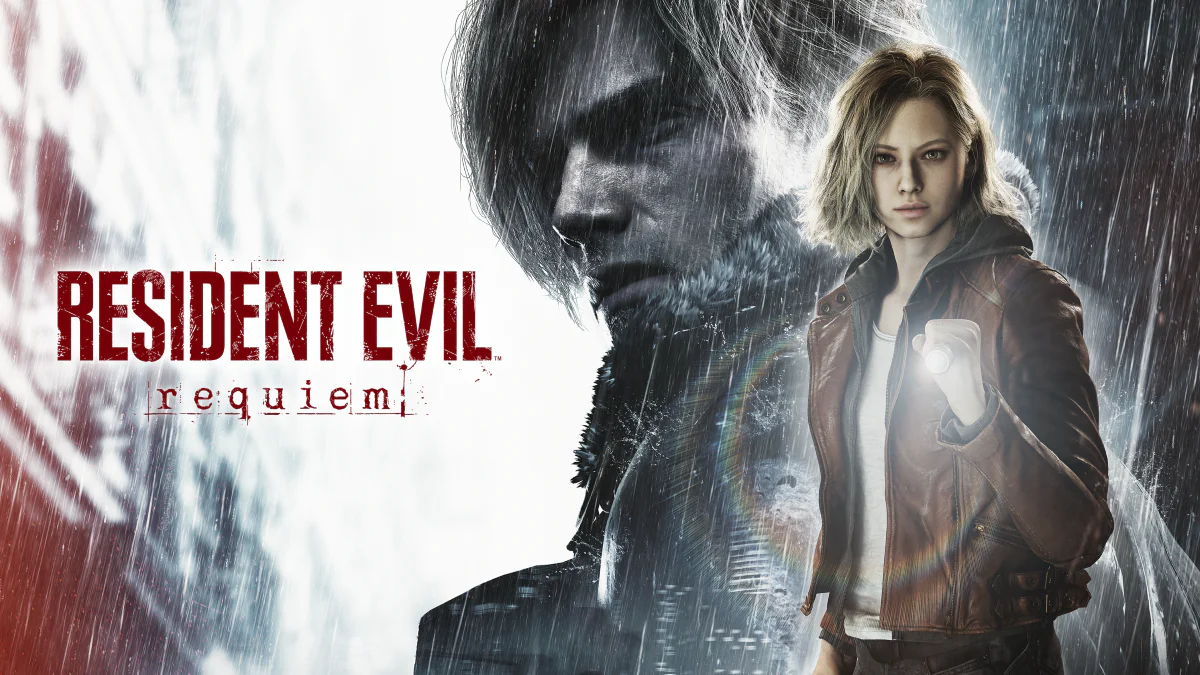


Requiem celebrates 30 years of Resident Evil by carefully revisiting its past to combine the best of survival and action horror.
After terrifying us with first-person horror, Resident Evil Requiem sees the triumphant return of third-person over-the-shoulder action. With an eye cast across the series’ history, this is a confident blend of the best of old and new Resident Evil, combining the stalking horror of Resident Evil 2 and the exhilarating action of Resident Evil 4, with just the right dose of intimate scares that defined Resident Evil 7.
Requiem is the most deliberate and careful Resident Evil has ever been about revisiting its past. With the return of poster boy Leon S. Kennedy, a long-awaited trip back to the remains of Raccoon City, and the reemergence of questions surrounding the Umbrella Corporation, it avoids the trap of pandering to fans and feels like unfinished business.
Set 28 years after Leon’s nightmare roaming the RPD headquarters and the city’s destruction, Requiem is essentially a distant sequel to Resident Evil 2 that unearths and mostly ties up the loose ends we assumed were buried for good – and of course it unravels a few new ones.
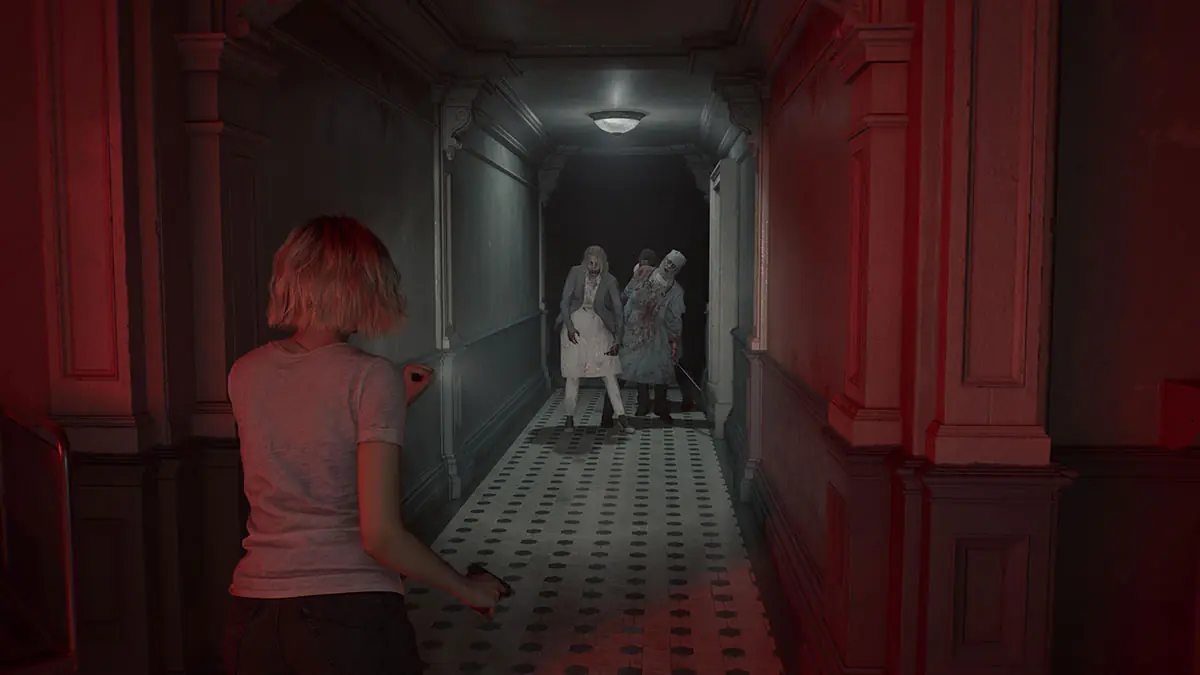
Before Leon gets his triumphant return to the place that started it all, our attention turns to newcomer Grace Ashcroft. Grace is an FBI analyst, not a veteran field agent. She’s inexperienced, visibly shaken, and unprepared for the horrors that unfold within the Rhodes Hill Chronic Care Centre, a sprawling labyrinth of corridors reminiscent of Spencer Mansion and the RPD – she’s the perfect foil to the calm and collected Mr Kennedy.
It’s here that Requiem reminds me so much of the RE2 remake, especially if you choose to play in third-person. Capcom recommends playing Grace’s sections in first-person to heighten the horror and channel RE7. But for me, Resident Evil just feels right in third-person. Thankfully, this time it’s been fully designed to accommodate both perspectives, which can be toggled at any time.
Grace’s gameplay leans heavily into the established survival horror playbook. Resources are scarce, backtracking is a necessity, and the clinic’s layout demands a good memory and considered methodical progression – it’s brilliantly designed in that regard. Armed mostly with a small handgun and whatever scraps she can scrounge, running into two enemies at once is a legitimate nightmare for Grace – and sometimes the smartest move is take it slow and simply sneak on by.
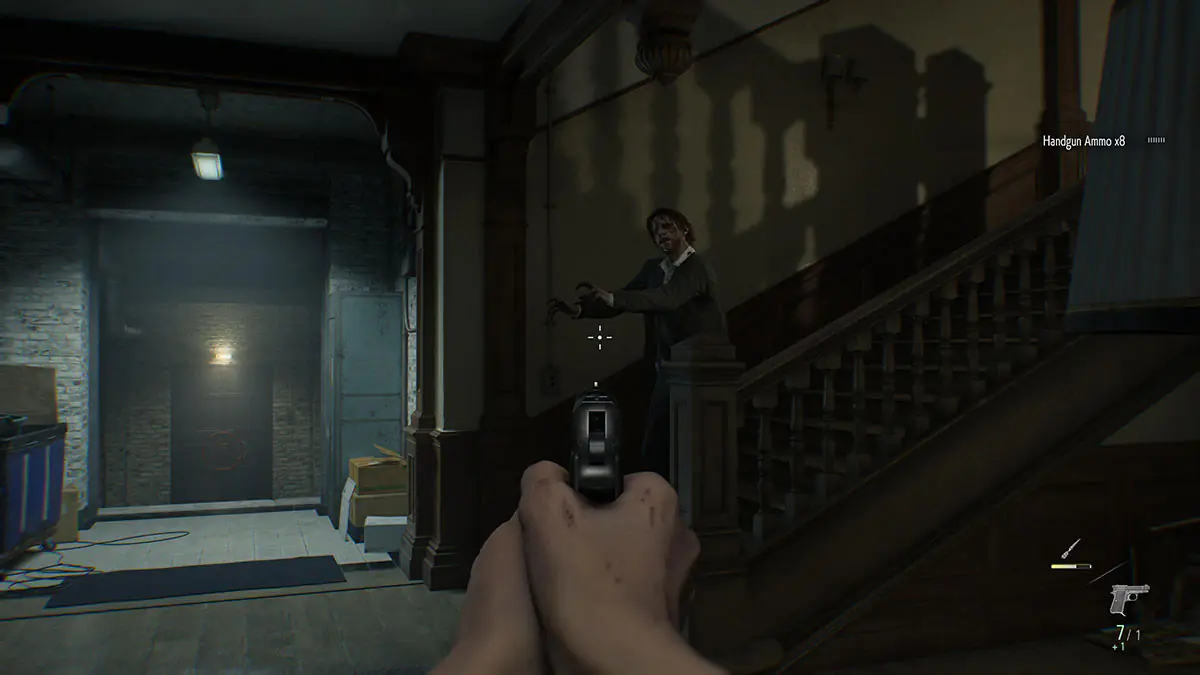
The zombies roaming the clinic now retain eerie remnants of what was presumably once their personality. Some mutter words. A particularly worrisome one struggles to sing. Surrounded by darkness, you’ll often hear them long before you see them. It’s proper modern survival horror, with tense implied threats that have you second guessing if you should engage or avoid them before there’s even a decision to be made.
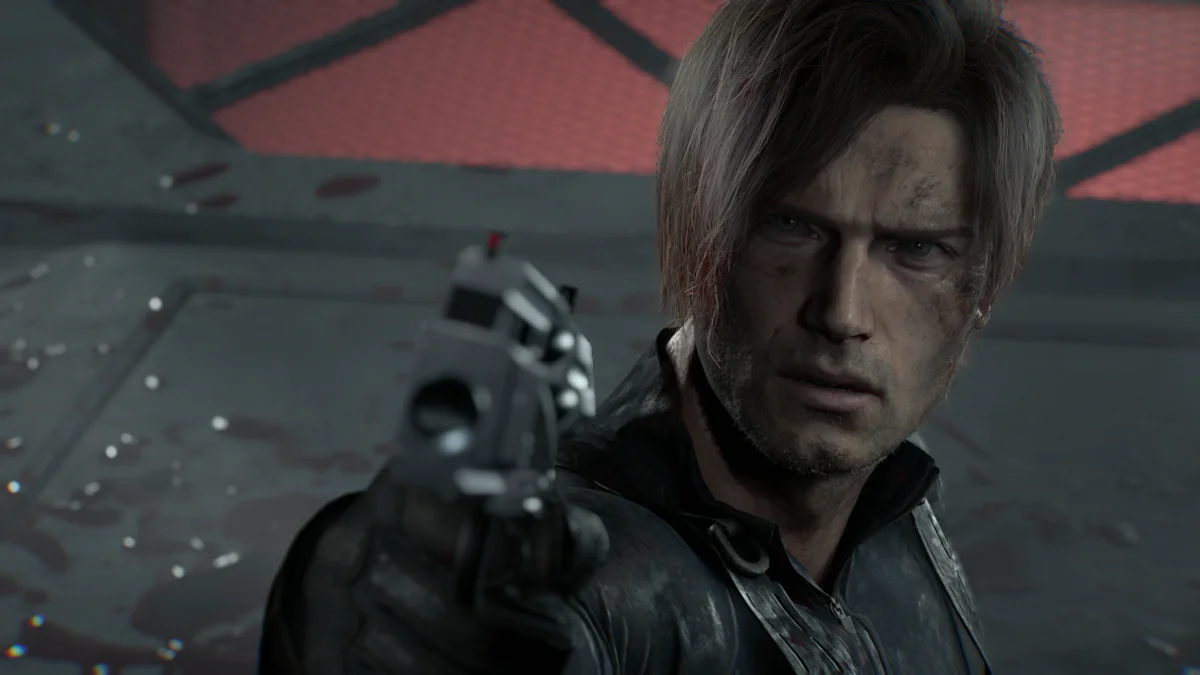
Contrast that with Leon S. Kennedy. While he’s contracted a nasty virus, he’s still the confident action hero we all want him to be. Whereas Grace projects her fear onto the player, Leon exudes determination and that comes across in how you instinctively play as them.
Resident Evil 4 turned the series into an action horror juggernaut in all the right ways, but since then, Capcom has largely been criticised for anything other than a return to stingy survival. But action is now just as much a part of Resident Evil’s DNA… when done correctly.
I’ll admit that at first, as Leon’s product placement Porsche rolled into view, I was worried Requiem might be too action heavy. And for some players, at times it might be. But for me, the mix between Grace’s determination to survive at all costs and Leon’s endeavour to blow everything wide open is the ideal balance for a Resident Evil game that’s moving the franchise forward while keeping an eye on the rear vision mirror.
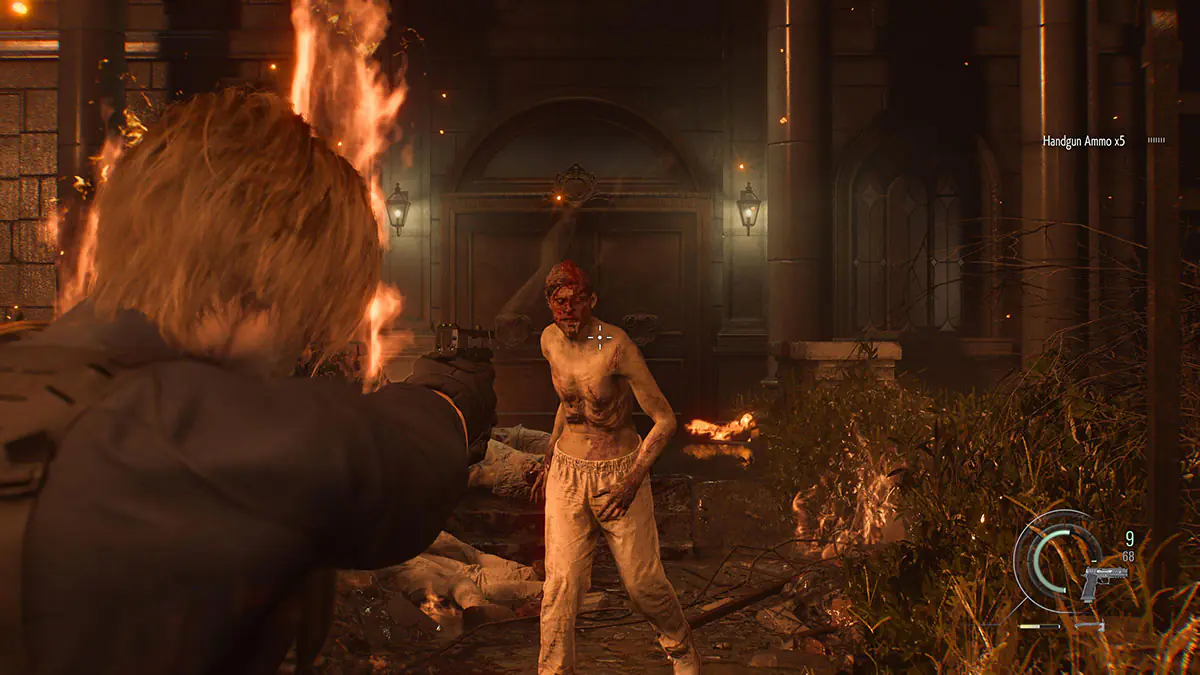
Whereas Grace can’t hide her fear, Leon’s seen this all before, and this time he’s arrived equipped to handle it. He’s packing serious firepower, actually remembers to bring some ammo, and has made some astonishing modifications to his trousers to carry it all at once. Following closely after Grace in the opening act, the clever design extends to experiencing the same world through different eyes. The remnants of her recent encounters linger, and enemies that forced her to retreat can be dispatched by Leon with ease. While the real danger is far greater – I died more often playing as Leon – the perceived threat is diminished by having the firepower and experience to deal with it.
Armed with a hatchet, and a mean roundhouse kick, Leon has also embraced close combat with ruthless efficiency that would make John Wick jealous. It’s part of why combat feels so much faster, beyond the greater weapons at his disposal. Whereas Grace retreats, or at most musters a desperate dainty push, Leon’s powerful melee attacks encourage taking a few shots and aggressively running in for the final kill. It’s familiar Resident Evil combat, with more emphasis on knowing when to attack or defend.
It’s these sections that leave me nostalgic for how I felt first playing Resident Evil 4. Leon’s confidence against the seemingly insurmountable is infectious, and of course his one-liners still cap the moment. While it’s much busier, Leon’s action focus provides a welcome and empowering break after shaking in Grace’s shoes, and it’s rather cathartic to take proactive revenge on the enemies that have been terrorising the past few hours. But in turn, I found Leon’s exclusive areas to be blander and less tempting to explore. They lean more on the enemy encounters and series nostalgia.
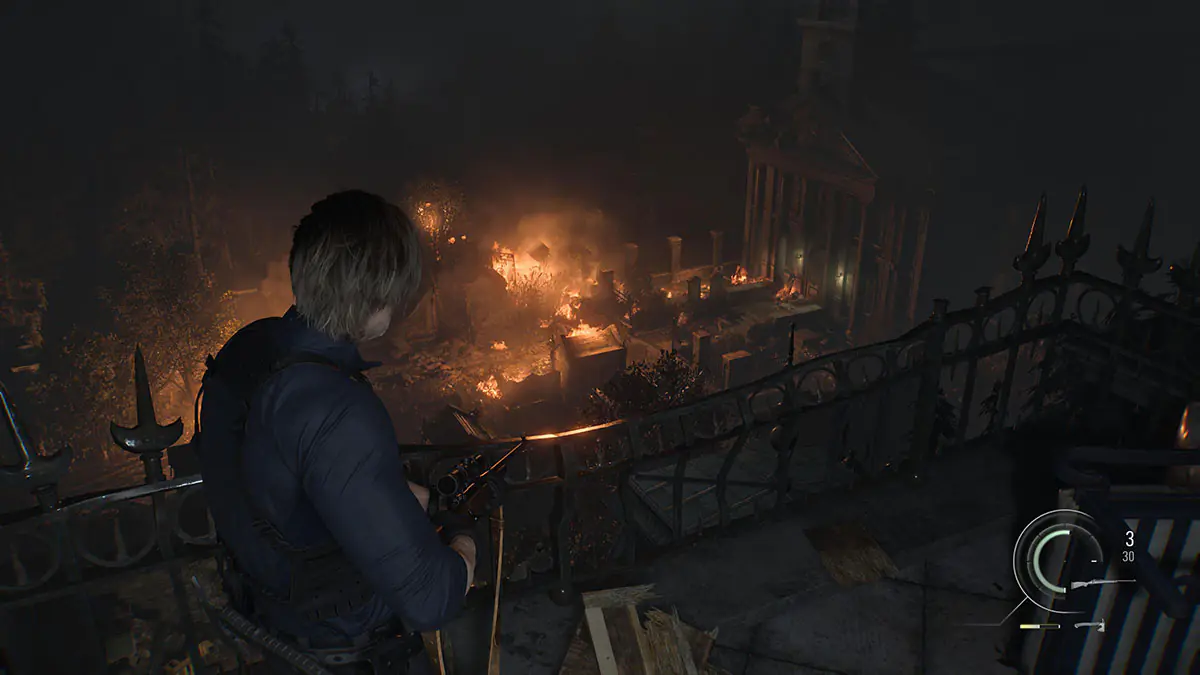
The blend of the best of the modern series survival and action gameplay is a resounding success, but Requiem’s greatest strength may well be its storytelling – at least in the early stages.
The opening hours bounce briskly between Grace and Leon, delivering the most cinematic and tightly paced narrative the series has seen in years. After a double dose of Ethan Winters as a first-person vessel to horror, Requiem puts its personable front and centre to keep you invested.
The pacing of the first half of the game is a triumph for Resident Evil storytelling, with mini cliffhangers prompting each character swap in quick succession; I was always left on the edge of my seat desperate to play just a little more. While the detailed lore remains tucked away in scattered hidden files to collect, the central narrative is clear, engaging, and surprisingly accessible for new players, despite its reliance on nearly three decades of convoluted history.
The second half eases off the narrative pace, allowing time to focus more on the unique gameplay of each character. These longer stretches with either Grace or Leon allow you to settle into their distinct rhythms of survival or action. It makes it easier to play, especially as more items are unlocked, but the trade-off is it loses some of the narrative urgency that defines the opening act. If the first half establishes Requiem’s world, the second half is all about experiencing it for yourself.
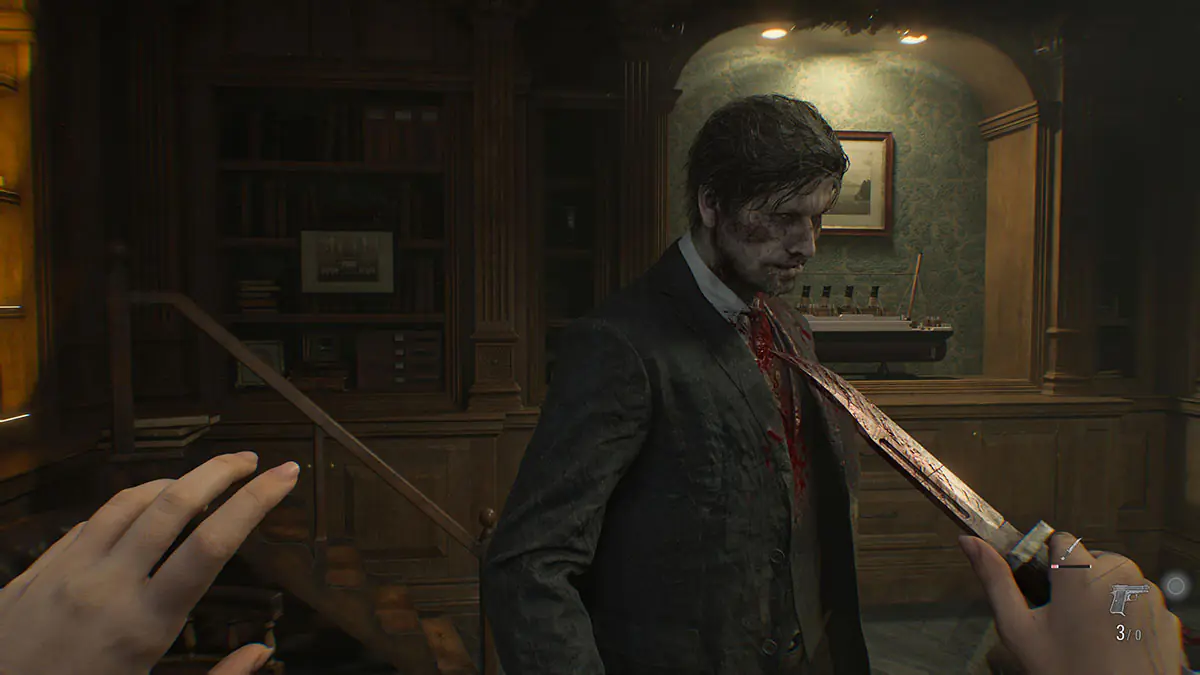
Like many of the greatest Resident Evil games, it does mean the opening half is likely to remain the most memorable. As the horror is front-loaded with Grace, the villains aren’t quite as menacing long-term and there’s a lack of truly spectacular boss fights. But that was never going to be Requiem’s strength with the divide between Grace and Leon’s abilities. Instead of always upping the stakes, it presents a well-structured story and hits its highlights in open play rather than predetermined boss battles.
Powered by Capcom’s RE Engine, Requiem looks and performs exceptionally well. Character models are richly detailed and expressive, and interior environments ooze atmospheric dread – especially those entirely new areas we haven’t seen before. Raccoon City itself, however, has devolved into a crumbling concrete wasteland, drowning in shades of grey that evoke the harsher aesthetic of Resident Evil 5 at times (Leon’s impressive biceps included). Unfortunately, the PS5 Pro version suffers from distracting PSSR shimmering at times, which continues to blight horror games. Otherwise, Sony’s mid-gen refresh is a great place to play and offers the best of everything without the need to choose between quality, performance or ray tracing; it’s all included. The Switch 2 version is also a compelling option if portable play is a priority – learn more about that from Alex, below.
How does the Switch 2 version stack up?Following my brief history of Resident Evil and Nintendo, let’s dive into Requiem on the Switch 2. I’ve completed the game three times on the Switch 2 at this point, both in handheld mode and in docked mode. I’ve also completed it twice on the base PS5, so I have some frame of reference in comparing those two versions. Rather than write a traditional review (you can read Ben’s review of the overall game here), this will instead focus on what makes the Switch 2 version unique and whether you should pick it up. (And on that note, I am not well-versed in the game’s technical implications, so I won’t cover them in this review. You should hit up Digital Foundry for that.) I’m happy to report that Requiem on Switch 2 holds up remarkably well compared to PS5 on all major fronts. As Steve alluded to in his Switch 2 preview, Requiem’s visual design and implementation are consistent between the two; what’s portrayed in the PS5 version, including the gore, lighting, and environments are also in the Switch 2 version. That said, they are not identical; the Switch 2 version sees adjustments to environmental assets as necessary. |
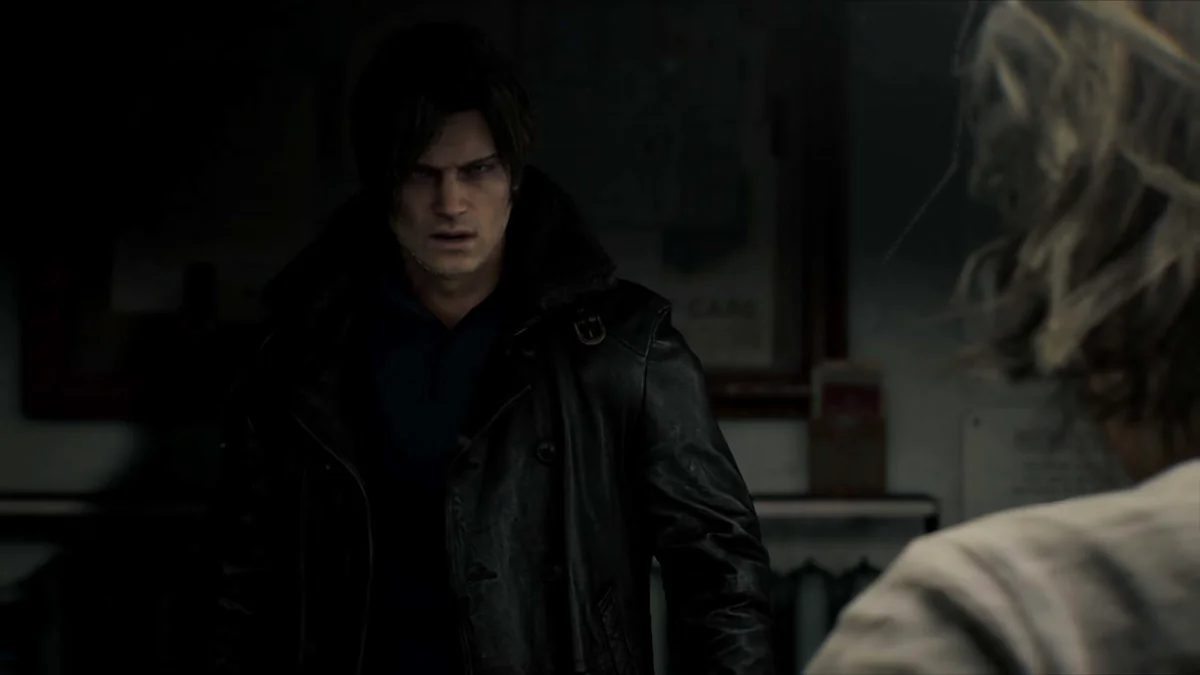
| While the Switch 2 version features no additional loading screens, loading points or broken up environments, its loading times — when loading a save, specifically — are expectedly longer than the near-instant ones on PS5. Switch 2 clocks in somewhere between 10 and 25 seconds depending on the size of the environment, which varies from Resident Evil 7-style claustrophobic hallways to two entire city blocks with both horizontal and vertical scale never before seen in the series (though reminiscent of some areas of The Last of Us Part 2). Even the latter doesn’t seem to have any pop up that I could notice. Some RE games on the original Switch, such as Resident Evil Revelations 2, were plagued with extremely long loading times and pop up, but thankfully Requiem is far better optimized here.
The most obvious difference any user who plays both versions is the framerate, resolution, and image quality. As a lower-powered handheld, there is no reasonable way the Switch 2 can match PS5, but it gets close enough. Switch 2 runs at a lower resolution and framerate than the PS5, with Switch 2 targeting and mostly hitting 60FPS at an upscaled 1080p resolution. In docked mode, I played on a 42” LG C5 OLED TV, and while not quite as sharp as the PS5 version, I found the image quality to be quite strong for the Switch 2. The Switch 2 version does have some noticeable framerate drops throughout the game, but they unexpectedly occurred more often when playing through Leon’s action-packed segments and particularly in claustrophobic areas, especially when there are many particle effects like fire on screen. Frame drops occurred less often in the larger open environments, contrary to my prior assumptions. In my opinion, the framerate drops do not affect gameplay, although they may for those more sensitive to fluctuations. |
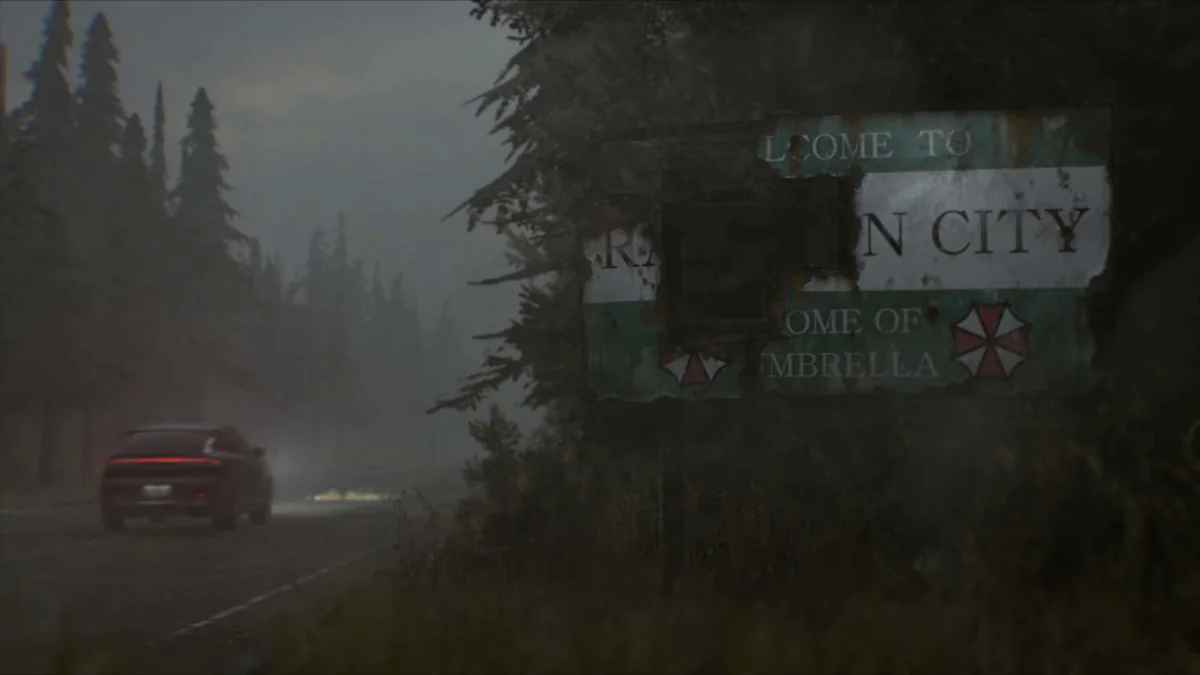
Framerate drops occurred in Raccoon City, but maybe not where you’d think (Image: Requiem Nintendo eShop page).
| The most noticeable downgrade anyone will notice are the characters’ hair strands: they’re silky smooth on PS5 (and even better on a PS5 Pro), but they’re a pixelated mess on Switch 2 and probably the single worst looking things in the game. Historically, RE Engine hair strands were never anything amazing, but even going back to the PS4 and Xbox One era, they never looked this bad. I can only chalk this up to the Switch 2’s DLSS upscaling algorithm not playing nice with thin and detailed objects like hair strands.
There are a few more downgrades. In the large city block area, textures for distant objects (like building) are noticeably lower resolution when viewed from afar, but get more detailed when seen up close, although they never reach the level of detail seen on base PS5 or more powerful hardware. Some of the lighting in the Switch 2 game also looks extremely blocky, again perhaps due to the game’s upscaling algorithm. Playing in handheld mode does disguise these blemishes, and the gameplay is often action packed with many moving parts, so it’s not likely the average player will notice these blemishes unless they intentionally go looking for them. (On that note, they’re more noticeable in first person and less in third.) Overall, I was very pleased with the Switch 2 version’s visual presentation. It’s remarkable that a genuine, full version of a graphics-pushing AAA franchise is available on a handheld system on day one. Capcom did a remarkable job with optimising the entire Requiem experience for Switch 2, with practically no corners cut. As of the time of writing, I think Requiem might be the best looking Switch 2 game available so far. |
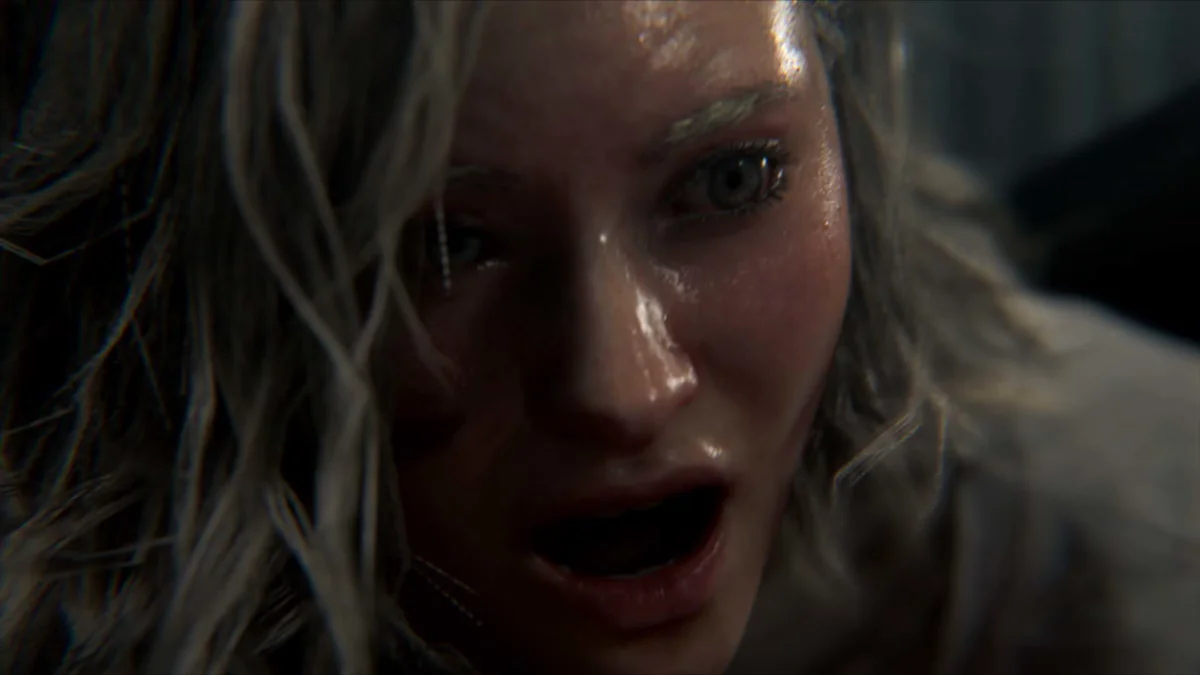
That hair, though… (Image: Requiem Nintendo eShop page).
Who should pick up the Switch 2 version?If you’re reading this, you may be wondering if the Switch 2 version of Requiem is right for you. The answer is highly nuanced and depends on the equipment you own and your lifestyle. A horror game like Requiem is naturally best experienced on a large TV outfitted with high quality surround sound speakers in a dark setting. While the Switch 2 version is highly competent even in docked mode, its PC and PS5, and presumably Xbox Series X, versions will fare better on in the living room with smoother framerates, faster loading times, and higher resolution visuals. If you own one of the Switch 2’s competitors and intend to play only in the living room, then the Switch 2 version is not the ideal version to get. However, if you are one of the millions of gamers out there who only own Nintendo hardware like the Switch 2, then I emphatically recommend picking up this version. You don’t need to buy another expensive game system when the experiences are this closely matched. Switch 2 is a perfectly fine way to enjoy the full Requiem experience. |
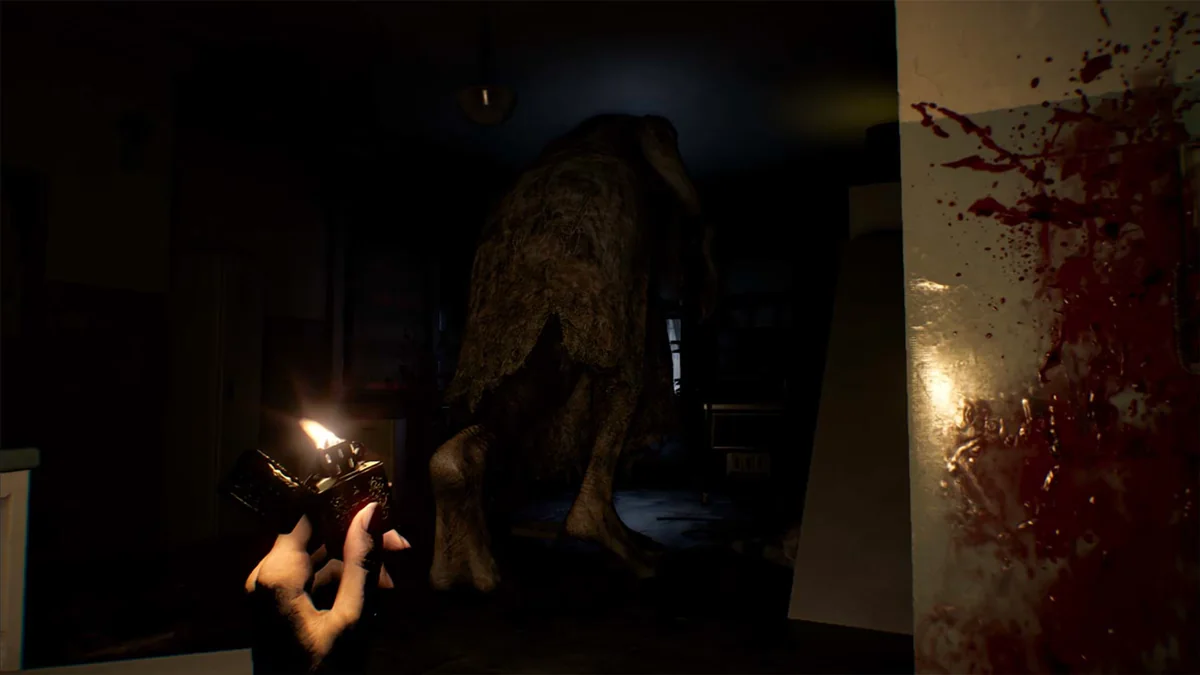
| What if you happen to be like me and you travel a lot? Is the ability to play Requiem on the go worth it even if you also own a PS5, Xbox Series, or desktop PC? And to that, my answer is also yes. I think the trade-off is worth it. In fact, I’m writing and finalising this review literal moments before I get on a 13-hour flight from Frankfurt to Tokyo. I will be playing Requiem on Switch 2 from somewhere above Europe or Asia, which is sure to make the journey go quickly. If you plan to play in the same way, just make sure you don’t get scared easily — that can be a liability on an airplane. |
By carefully honouring its past and deliberately weaving together the best of survival and action horror, Resident Evil Requiem finally reconciles the series’ genre identity. This is the most captivated I’ve felt playing a new Resident Evil story since booting up Resident Evil 4 on GameCube all those years ago. It understands why it got action right all those years ago and finally how that best integrates with Resident Evil’s more traditional horror roots – or at least the remakes and reimaginings of them.
Leon remains an important ingredient as the poster boy for the franchise, but the real key is partnering him with someone without his courage who’s still determined to survive. Resident Evil is no longer choosing between survival or action. With Requiem, it’s finally mastered survival-action horror.
Our primary Resident Evil Requiem review was written by Ben Salter (all text on white background) using using a promotional code on PS5 Pro, as provided by the publisher. A secondary code was also provided by the publisher on Switch 2, as used and written up by Alex Aniel (all text on light blue background). Click here to learn more about Stevivor’s scoring scale.
 |
Resident Evil Requiem27 February 2026PC PS5 Switch 2 Xbox Series S & X
|
This article may contain affiliate links, meaning we could earn a small commission if you click-through and make a purchase. Stevivor is an independent outlet and our journalism is in no way influenced by any advertiser or commercial initiative.