


















This one's attracting a very niche audience.
I’m not the biggest fan of VR, but I’ll dabble when it’s connected to something that appeals to me. Batman Arkham VR? Hell yeah. Deadpool? Less so, but sure. But when it comes to my favourite franchise of choice, Star Trek, I’ll give anything a go. The fabled sci-fi institution is no stranger to VR either — the now-defunct Stage 9 is undoubtedly the pinnacle of Trek VR (and even non-VR sim), though Bridge Crew comes a close second.
Enter Star Trek Infection, a survival horror VR title set on a Defiant-class starship in the late 24th Century. Running approximately 6-7 hours long, Infection gets its Trek right, but weighs things down with horror-themed mechanics and controls that are both finnicky and frustrating.
In Infection, players fill the shoes — quite literally — of a Vulcan Starfleet officer named Lt Ferak. The officer has a bit of a mysterious past; some of his journey has been classified by Starfleet, and the rest is actually out of his own reach, as he cannot remember a chunk of his past. This absolutely plays into the larger problem he faces: a titular infection of unknown origin has taken over the ship he finds himself on, the U.S.S. Lumen.
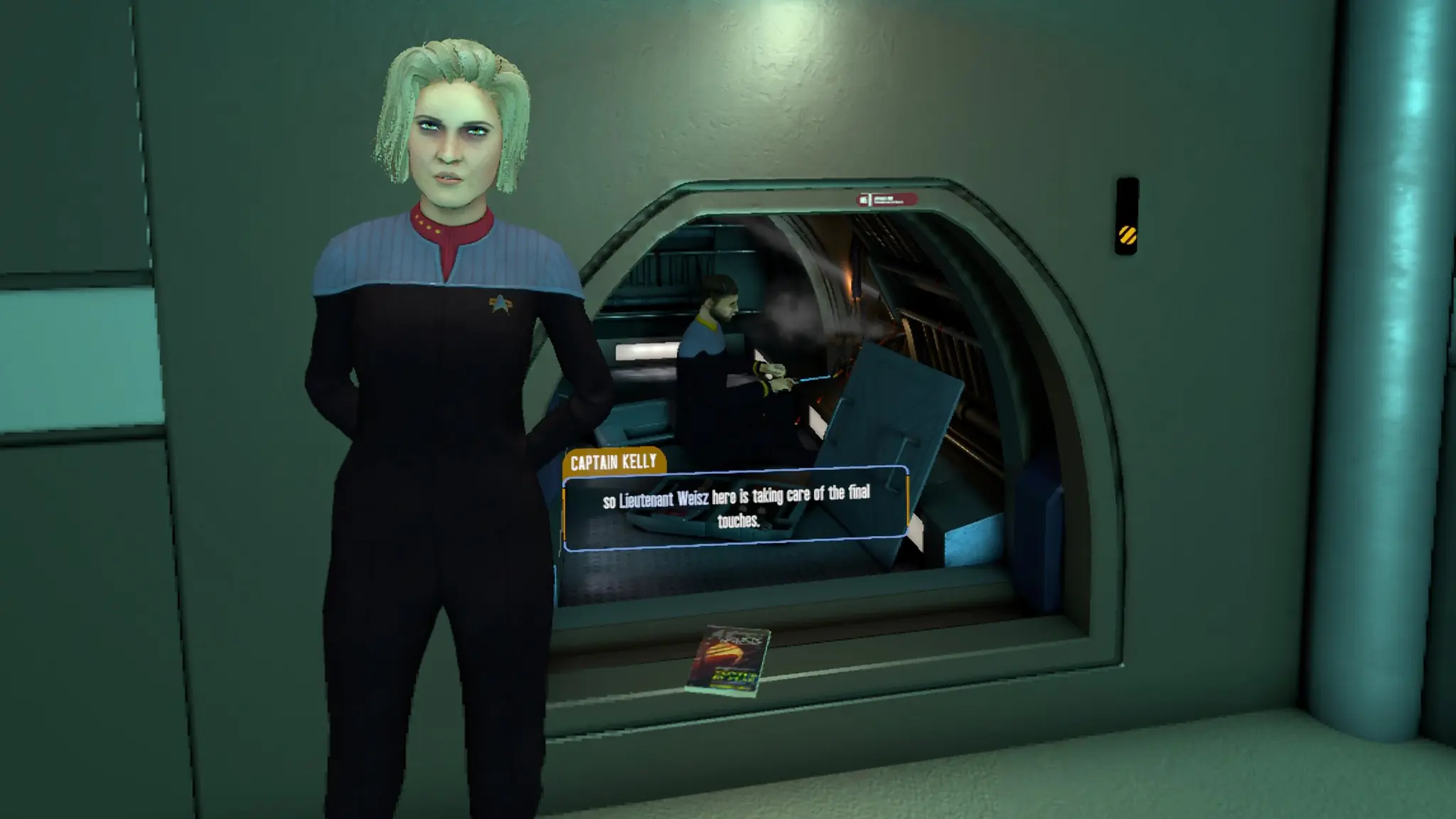
Infection begins on the hull of a deep space station, offering up a truly Trek experience as Ferak works to stop a rogue asteroid from wreaking havoc. Not long after, you’re in the station’s shuttle bay, helping another officer repair a short-range shuttle, also managing to sneak a peak of the Lumen as she heads into transporter range to pick you up. Hell, you can forget about making a choice on Infection‘s title screen, instead opting to explore the bridge of a Defiant-class ship.
It’s these small, simple pleasures that make Infection immediately enjoyable; just like in Stage 9, actually feeling as if you’re in the transporter room of a Starfleet vessel is something quite a lot of fans will revel in. Moving isolinear chips around to fix a subsystem? That’s exactly what I’m here for.
It’s not long before Infection‘s premise sets in and you trade those shiny Starfleet corridors from something out of a horror film. Initially armed with nothing but a tricorder, Ferak needs to slink around the Lumen, avoiding infected crew members wherever possible and resorting to a Vulcan neck pinch if he can sneak up on an isolated one. It’s here I’ll state that Infection is more psychological horror than truly scary, though it does resort to the odd jump scare.
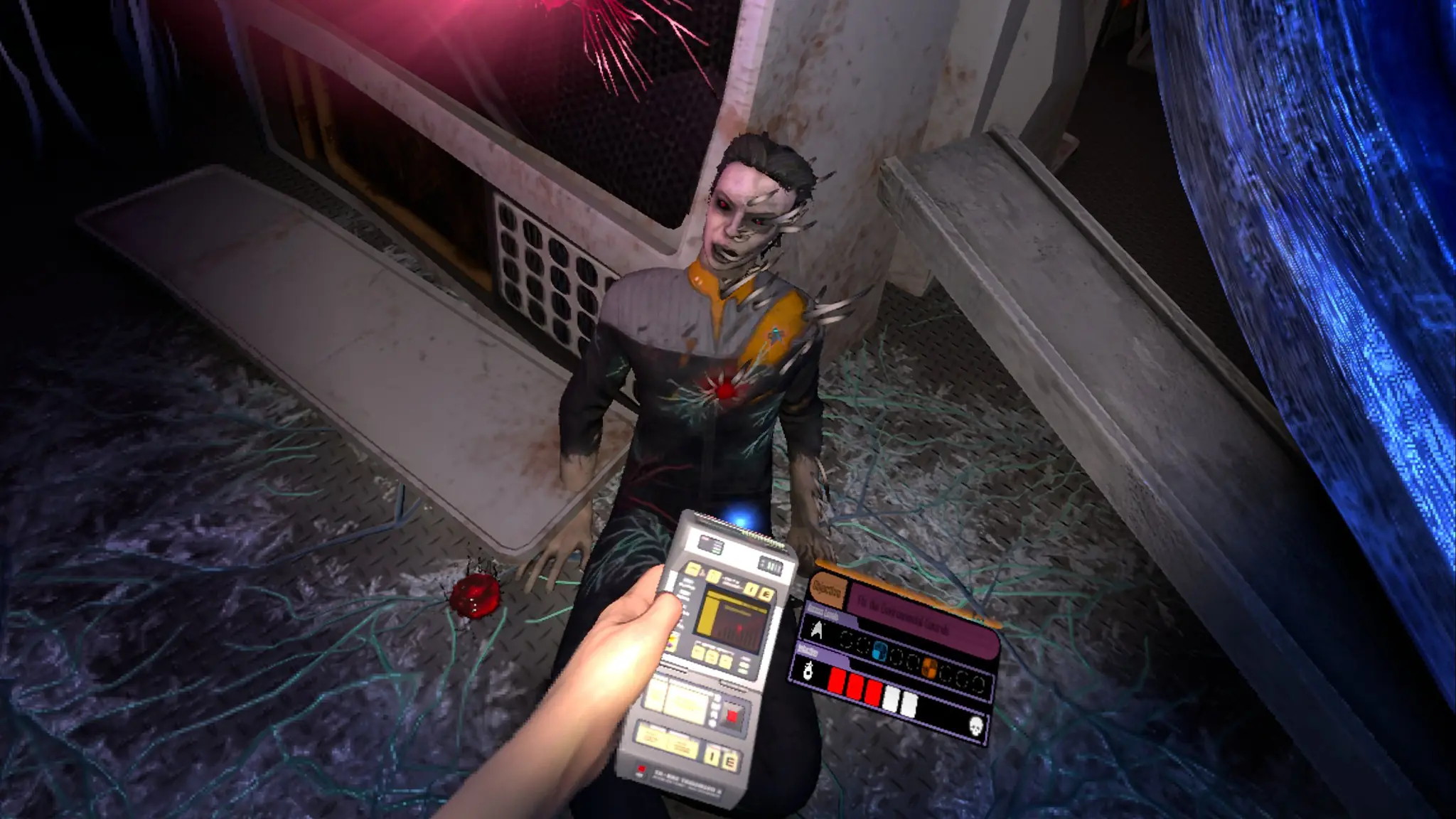
Initially, Infection does a better job of dabbling in horror in a way that makes sense as compared to Strange New Worlds’ recent zombie-themed episode. This won’t be the first time an unknown pathogen sneaks aboard a Starfleet ship, and it won’t be the last. Identifying the problem and working with the Lumen’s captain and medical officer to work on a cure is clearly logical.
Shortly afterward, though, Infection goes off the rails and turns into a horror game with a Trek skin rather than the other way around. The infection not only takes over the Lumen’s predominantly human crew complement, but then starts to spawn flying sandworm-like beings.
Thanks to Infection‘s rather sporadic marketing push — guns initially blazing initially, and then dead silent until just last week — I was under the impression that I’d have a choice in how Ferak handled the contagion. I believed I could pick up a phaser, lock it to stun and keep the infection at bay within my own body, acting according to protocol and not succumbing to whatever new abilities the infection could provide. How wrong I was.
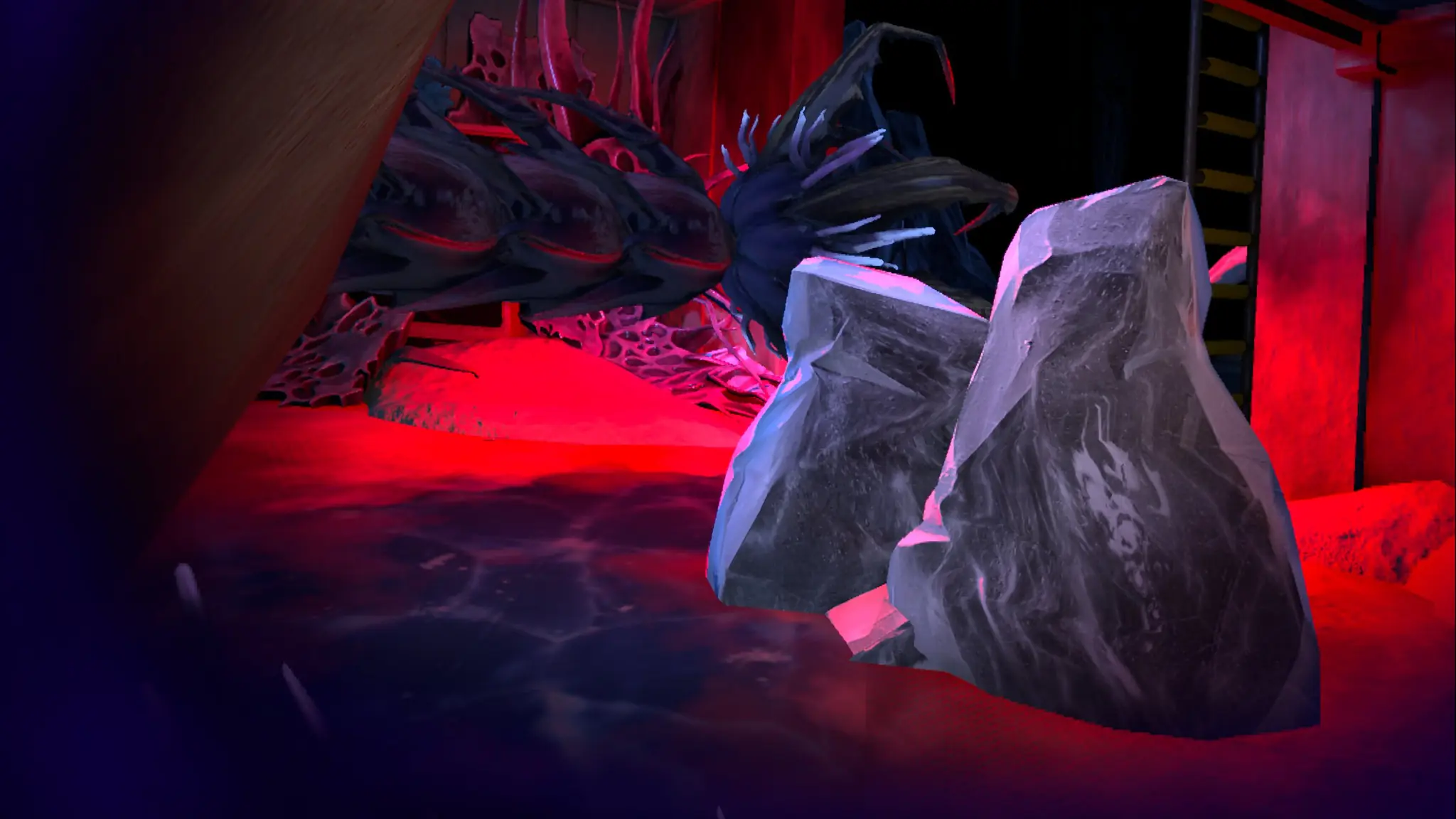
Infecting yourself is mandatory; Infection requires you to compromise yourself, using newfound abilities to grapple past crevices or subdue opponents. While it wouldn’t have been my first choice, I understand the design of the decision; it’s far less compelling as truly Trek stuff, but everything’s got to have a gimmick, eh?
The problem is, it’s in the core requirement to balance your personal viral levels that Infection shows how rough around the edges it can be. Too much non-Vulcan DNA in his system at any one time will kill Ferak, so you’re constantly being required to skirt the fence, trading your Vulcan arms for plant-like tendrils and back in order to progress.
Theoretically, this balancing is relatively easy; I always had two or three hyposprays on hand to make myself less monster and more Vulcan. Getting them to actually work, though, was a different story altogether. Some could be used with little effort, and others made sound effects as if I was using the hypospray, but would never actually bring my viral load down. Randomly, hitting the Meta Quest button and trigger together, as if taking a screenshot, generally helped the medical device to register its usage.
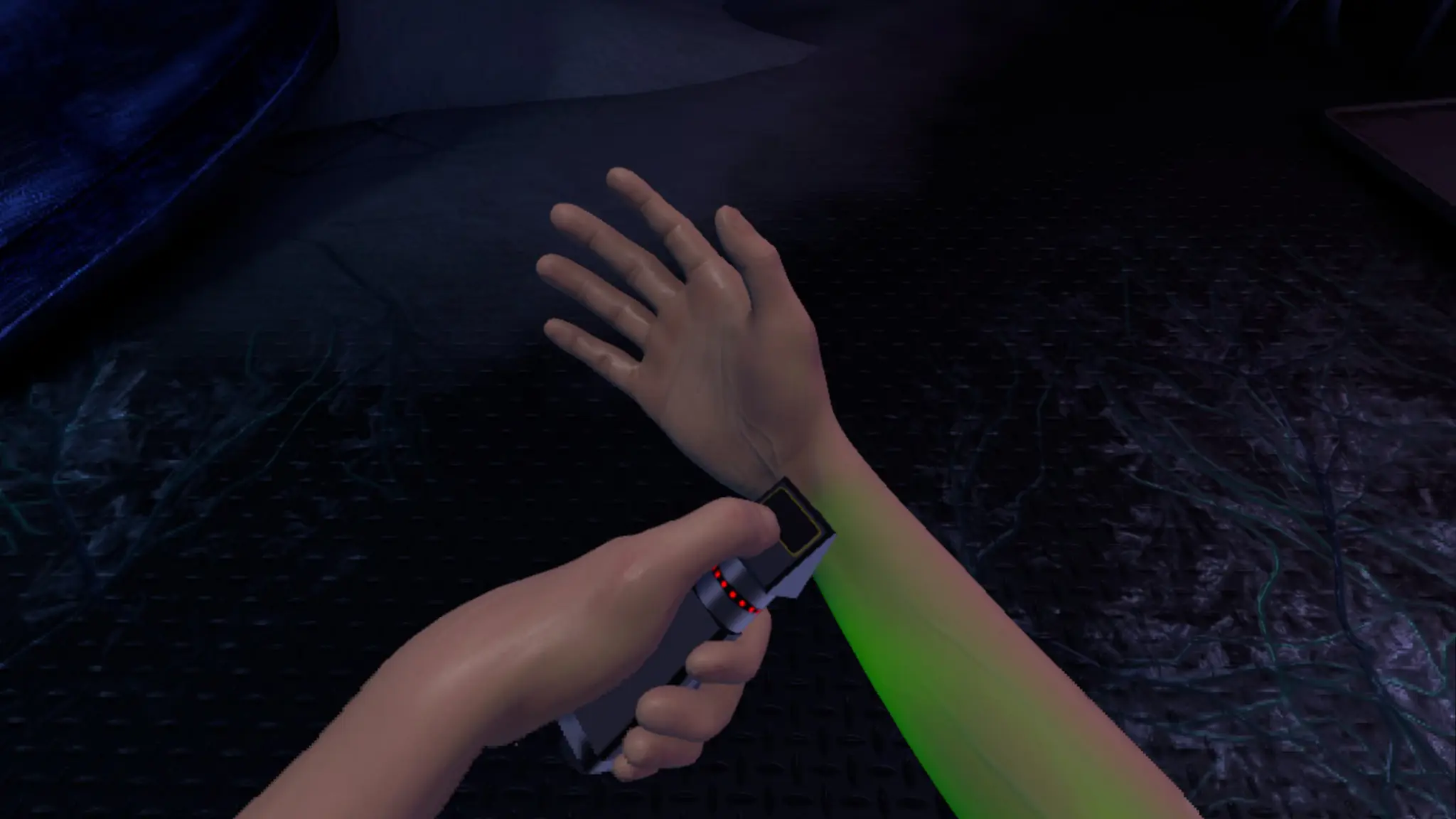
Problematic registry of actions also rears its ugly head when trying to deliver a Vulcan nerve pinch; if you latch on, you’d better hope things don’t glitch out, as otherwise your opponent will be alerted to your presence and deliver a one-hit kill. Even throwing a glass pitcher to distract enemies can be problematic when your throw doesn’t in any way match the arc you’re shown it will.
And that’s a shame, really, as there’s clearly a lot of heart to be found within Star Trek Infection. Developer Played With Fire clearly understands how races like the Vulcans and Cardassians fit and function within the Star Trek universe, and has a crafted a compelling mystery around that. Its VR and horror mechanics, though, are likely where players will be let down.
Star Trek Infection is already a niche title, appealing to the cross-section of Star Trek fans who also have access to a VR headset. That paid, it’s priced very competitively at around $40 AUD; if you happen to sit in the centre of that very specific Venn diagram, that may be enough to give it a try. It’s not like there are a lot of new Trek games — or even VR ones — right now. Just like my recommendation for Star Trek Voyager Across the Unknown, I’d suggest playing on its lowest difficulty to attempt to bypass some of the pain points I’ve described above.
Star Trek Infection was reviewed using a promotional code on Meta Quest 3, as provided by the developer. A Steam VR code was also supplied. Click here to learn more about Stevivor’s scoring scale.
This article may contain affiliate links, meaning we could earn a small commission if you click-through and make a purchase. Stevivor is an independent outlet and our journalism is in no way influenced by any advertiser or commercial initiative.