














Civilization, a video game franchise about navigating successive eras of human development, has been around long enough that it can be defined in ages and epochs of its own. Civilization 7, the latest in the series’ 34-year run, evolves the series in a lot of small ways that feel very wise.
Civilization 6 was interested in smoothing out the new player experience and making the traditionally very dense world of 4X strategy more digestible. In this, it was very successful. It made the process of getting started in Civ for the first time much easier to understand, and even brought the series to consoles in a way that greatly lengthened its lifespan.
By contrast, Civilization 7 seems interested in helping those same players better understand the mid- and late-game. This starts with what I think is one of the game’s most interesting changes – your Civ (the nation you choose to lead) and its leader character are now decoupled from one another. Civ has traditionally preferred to live in a historical mode, uniting leaders and Civs as a package deal. I think that Civ 7’s break with that tradition is very wise. Letting you remix history by making leaders and Civs discrete choices creates many new interesting synergies that will excite veterans a great deal, and provide a bit of enjoyable flavour too.
In one game I played, I was Napoleon, leader of the nascent Persian Empire. The version of Napoleon I was playing preferred a blend of military might and diplomatic nouse, a combination that paired very nicely with the Persian Civ’s playstyle. This pick-and-mix approach applies to your foes as well – in that game, I was up against Harriet Tubman, who was leading the Egyptians; Augustus Caesar, now the leader of China; and Machiavelli, who was (rather amusingly) leading the Romans.
This chaos element helps keep you on your toes in every game – the conniving diplomat Machiavelli in charge of the warlike Romans feels like it could be an odd match, but it could also be very powerful with the right strategy. It makes you feel like you need to keep a sharper eye on your rivals, engaging with them more meaningfully to stay one step ahead.
Leaders have also had a rework. As I noted earlier, leaders are now built to favour two of Civilization 7’s primary attributes rather than one. These conditions are Militaristic, Diplomatic, Scientific, Economic, Expansionist, and Cultural. It’s up to you how you wield your leader’s attributes as part of your strategy – are you planning to cripple your opponents’ economies with the might of your own? Rapidly expand your territory, establish an empire, and enforce peace with your neighbours through strong diplomatic ties? Charge into the future through science and strike at your neighbours with technologically advanced war machines?
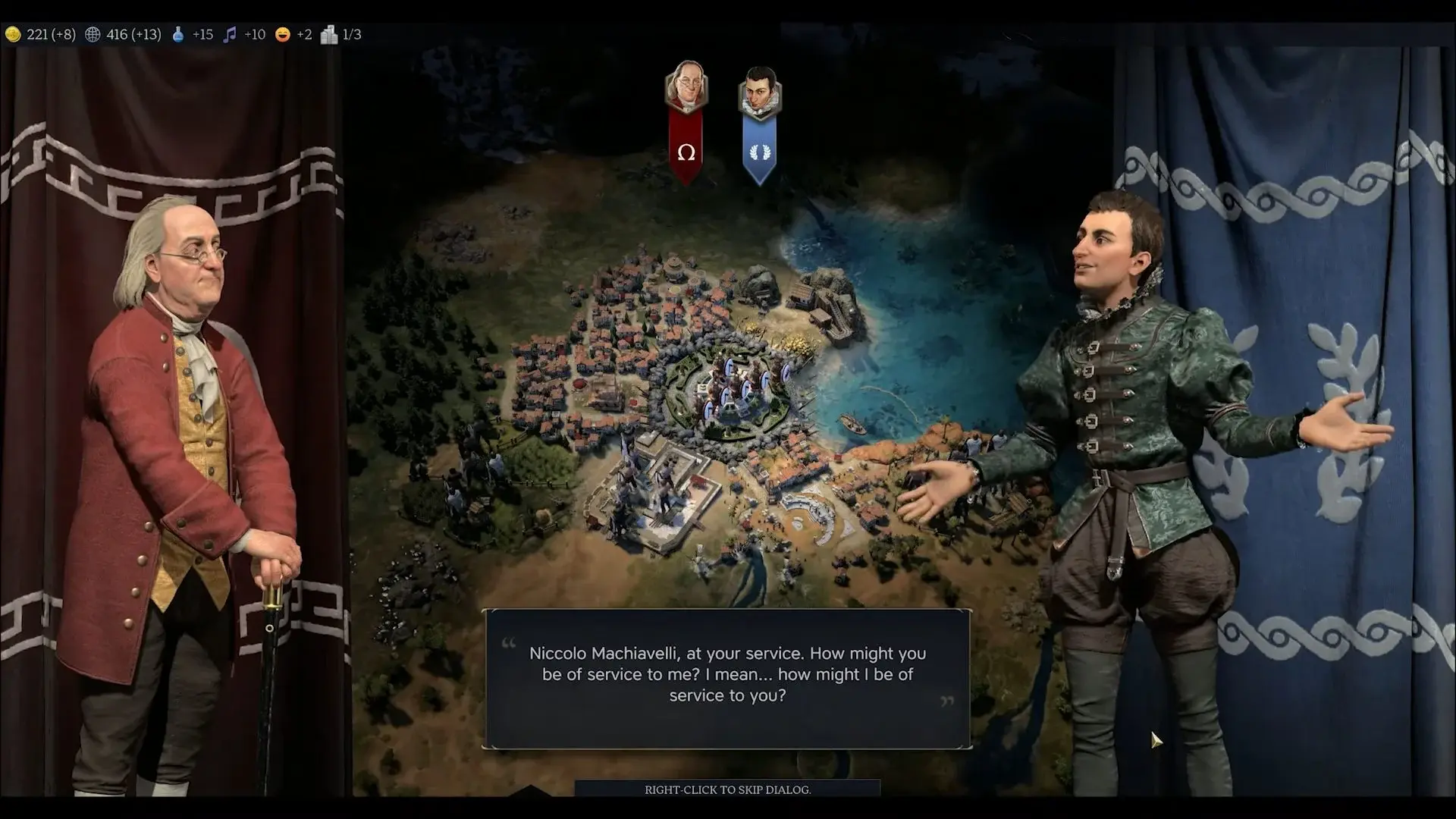
These decisions are entirely up to you, and it’s easier to start making them than in any previous Civ title. Indeed, all the pre-game set-up screens seem designed to spark those synergistic ideas. Shake things up – take a leader and a Civ that don’t synergise well and see how far you get. The game is more than happy to let you test your ideas.
Even if your wilder strategic ideas don’t bear fruit, that’s okay. Civilization 7 has made a change to the way each game plays out. Previously, a game of Civ would move through various ages. In Civilization 7, the game is broken down into three discrete eras – the Antiquity Age, the Exploration Age and the Modern Age. Achieving specific growth milestones inches you closer to the next Age.
Once your current Age gives way to the next, you’re given a significant, powerful choice – you can swap your current Civ out for another, or continue with the one you have. This means that, if things aren’t going quite the way you planned or you’re encountering stiff resistance, you can pivot to a different Civ and strategy mid-game and it doesn’t cost you anything.
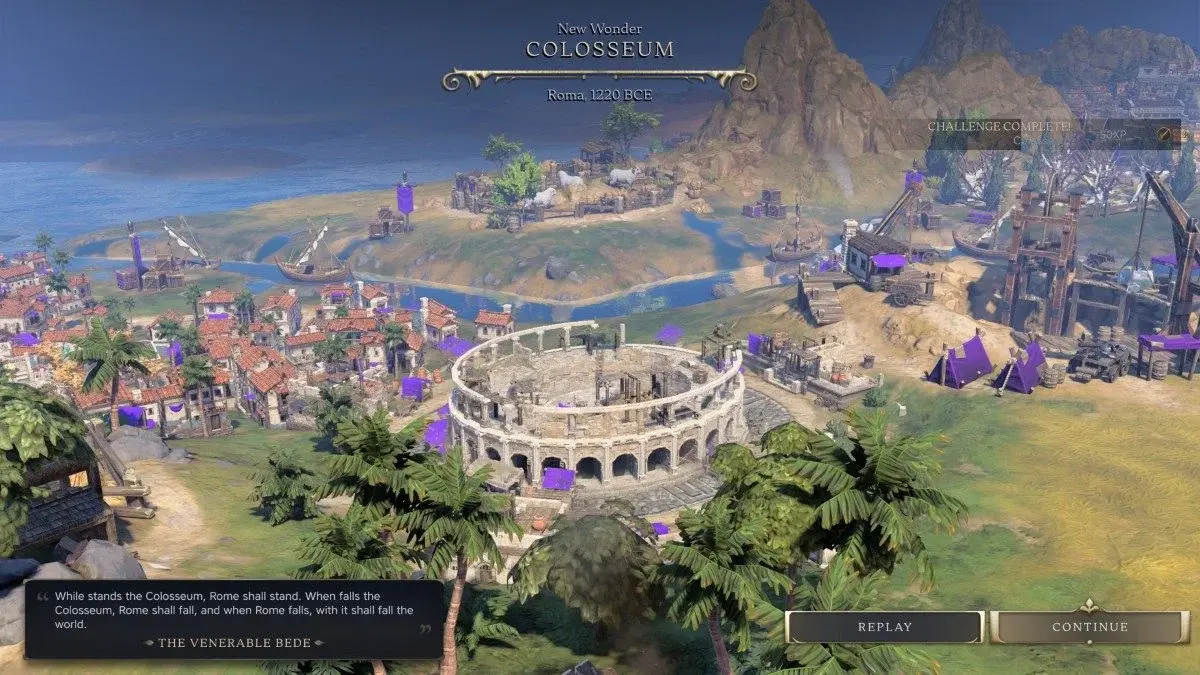
I am sure that this creative choice will divide some Civ veterans. For me, I think it rules. I think it opens up yet another array of creative, strategic options that will keep the game feeling fresh across multiple matches. It also helps keep the mid and late-game interesting – playing the same Civ for a 10-hour game of hundreds or thousands of turns can become tedious.
Variety is the spice of life, and letting you evolve your strategy so dramatically keeps each match feeling exciting and uncertain. Knowing that your opponents can do this too introduces another chaos element for the player to deal with. This is Civ with a little spice on it.
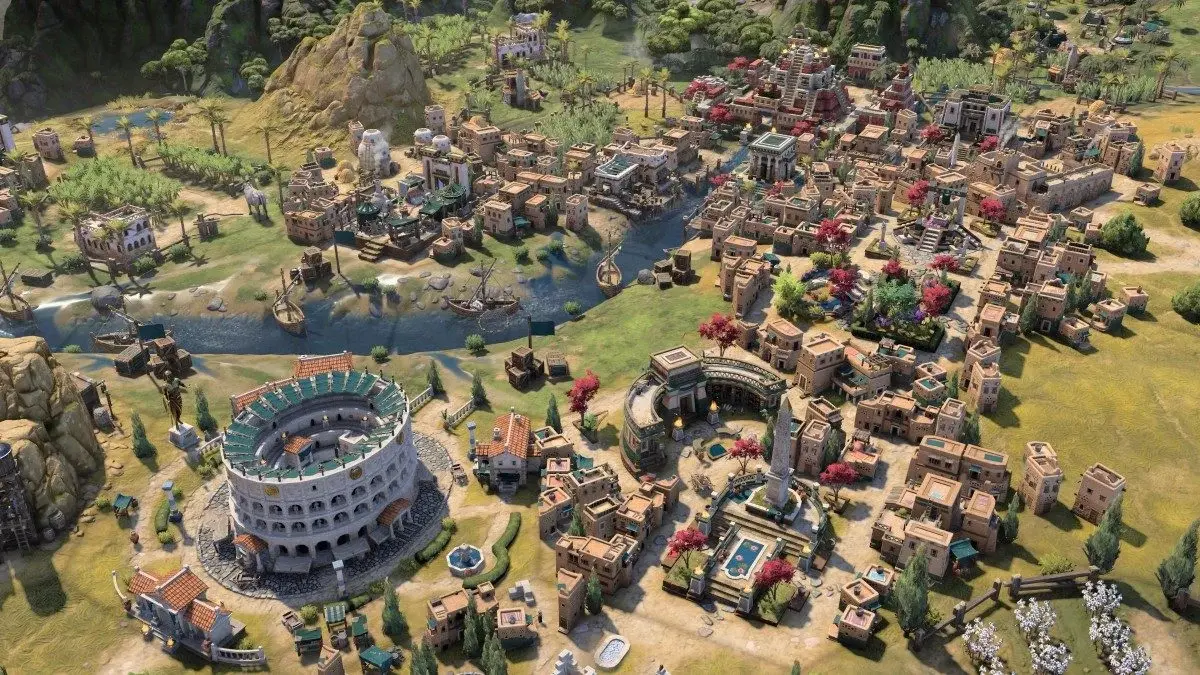
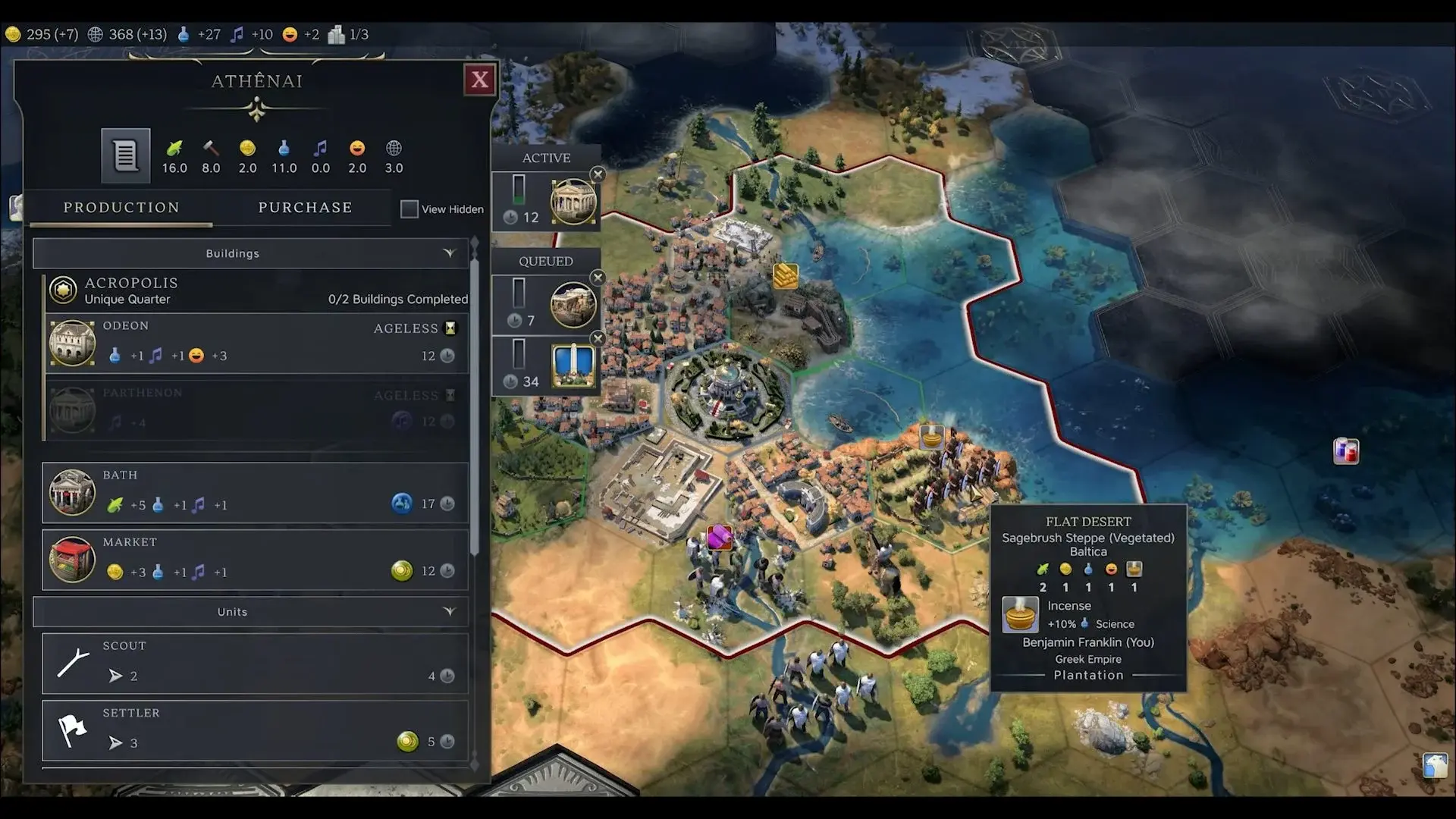
Beyond this, there are myriad smaller changes to the flow of the average game, and it feels like we have Civilization 7’s day-one controller support to thank for it. One example: you’re no longer troubled by staged building on each tile. Now, when your city grows, you select what you’d like the tile to be and the required building appears immediately. You can still upgrade your tiles, and thus the buildings on them, as you go.
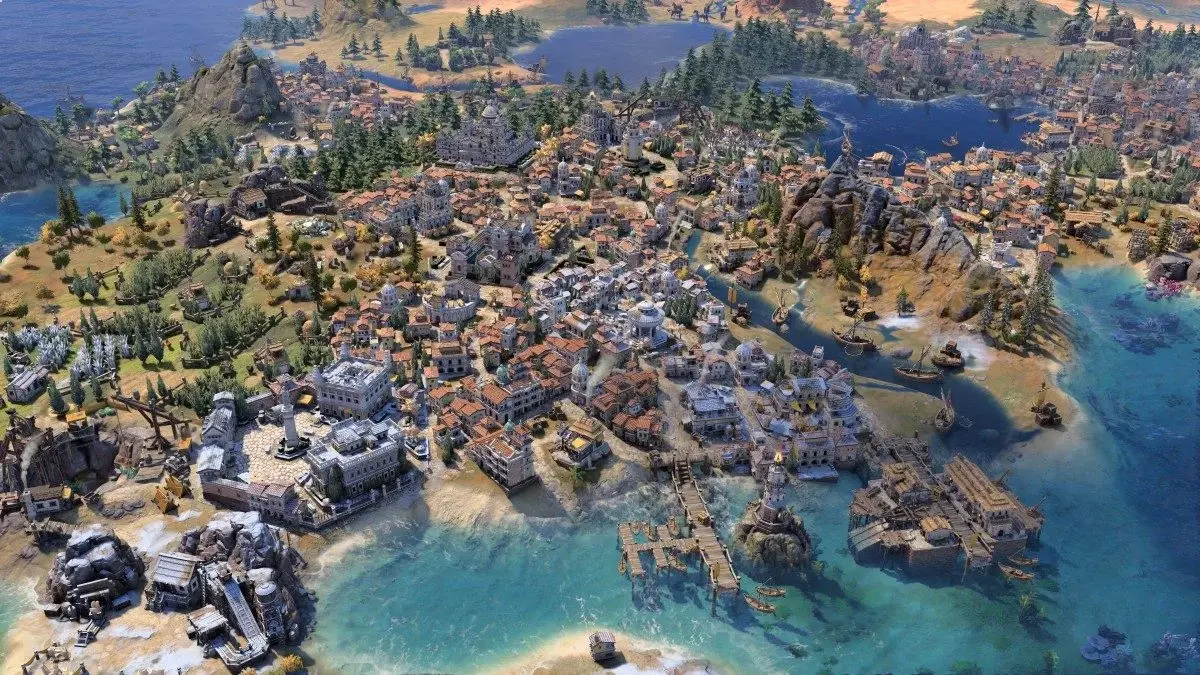
This removes a step that, in previous editions, could become quite tedious as the game progressed and your Civ expanded into multiple major city-states. It’s a small, welcome change that has a big impact on the game’s flow and is most keenly felt in the mid and late-game.
There are loads of similarly small changes, places where the team has found an annoying or tedious edge to file down. These changes never subtract from the experience, they only seek to smooth out a few of the gnarlier remaining wrinkles.
In all other regards, Civilization 7 miraculously remains the kind of crunchy, meticulous 4X strategy title the series is known for. Outthinking and outplaying your opponents is still such a special thrill, and with so many new paths to victory available to you, players will hopefully feel more of that.
Civilization 7 feels like a game that understands its complexity is both its greatest strength and greatest weakness. In an era of games from AAA publishers that must hit lest franchises are retired and the studios that made them closed, it would have been easy for Firaxis to dumb the experience down. But it hasn’t.
Firaxis hass attempted to minimise bloat and tedium where it can, but never at the cost of the deep, rewarding strategy that made it famous. Civ 7 is willing to bet on the player, that they’re smart enough to recognise quality material when they see it, and that’s to be commended.
There is so much more I could say about Civilization 7, but this review would run 7,000 words, and I think you already get the idea. Civ 7 isn’t just good, it’s the real deal. It’s a sequel that thinks like one of the matches it contains – a lot of small but significant strategic decisions that, when added up, create a winner. It feels different enough from previous iterations to justify the 7 in the title, and it thoughtfully builds on what came before. Civilization 7 is one of 2025’s first must-play titles.
Civilization 7 was reviewed using a promotional code on Windows PC via Steam, as provided by the publisher. Click here to learn more about Stevivor’s scoring scale.
 |
Sid Meier's Civilization 711 February 2025, 5 June 2025 (Switch 2)PC PS5 Switch Switch 2 Xbox Series S & X
|
This article may contain affiliate links, meaning we could earn a small commission if you click-through and make a purchase. Stevivor is an independent outlet and our journalism is in no way influenced by any advertiser or commercial initiative.