














Galaxy questing.
Star Trek Voyager was the first series in the franchise that I ever really watched. Chaotic, late-night scheduling plagued it for much of its Australian airing, but I was the kind of kid who would typically fall asleep with the TV on anyway. Having now as an adult watched Star Trek right through from the original series up to the modern streaming era shows, I can’t say that Voyager is my favourite – Deep Space Nine is just a masterpiece – but it is the show that I do truly have the most affection for due to that childhood attachment.
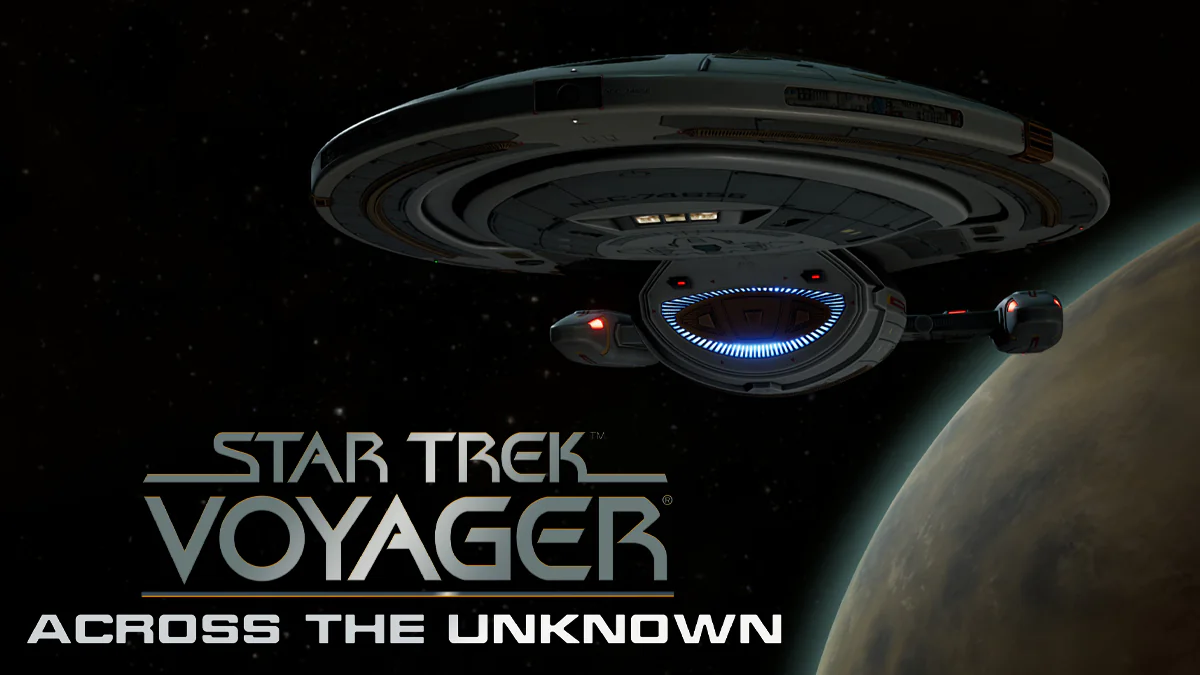
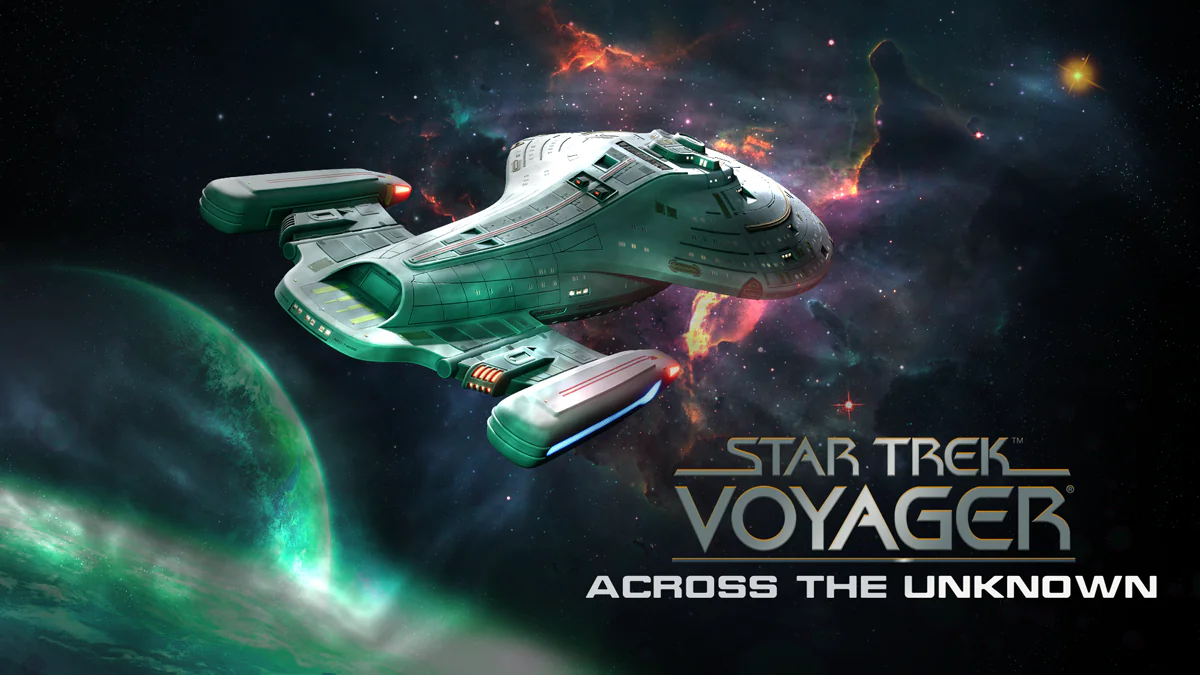
I was in utter disbelief when I saw the announcement of a new Voyager video game coming almost 25 years on from the show’s finale, but Star Trek Voyager Across the Unknown is now here, and despite its issues, I have a deep affection for it too.
Across the Unknown broadly follows the story arc of Star Trek Voyager’s seven-season run. The U.S.S. Voyager is flung across the galaxy into territories foreign and unexplored, and we’re dropped into the boots of Captain Janeway as she’s tasked with navigating her ship and crew through a potentially lifelong journey home to Earth. Across the Unknown will fully spoil just about every big moment from the entire series along your way through it, but conversely, coming in with knowledge of the show also arms you with a pretty decent game guide for any big decisions to be made along the way.
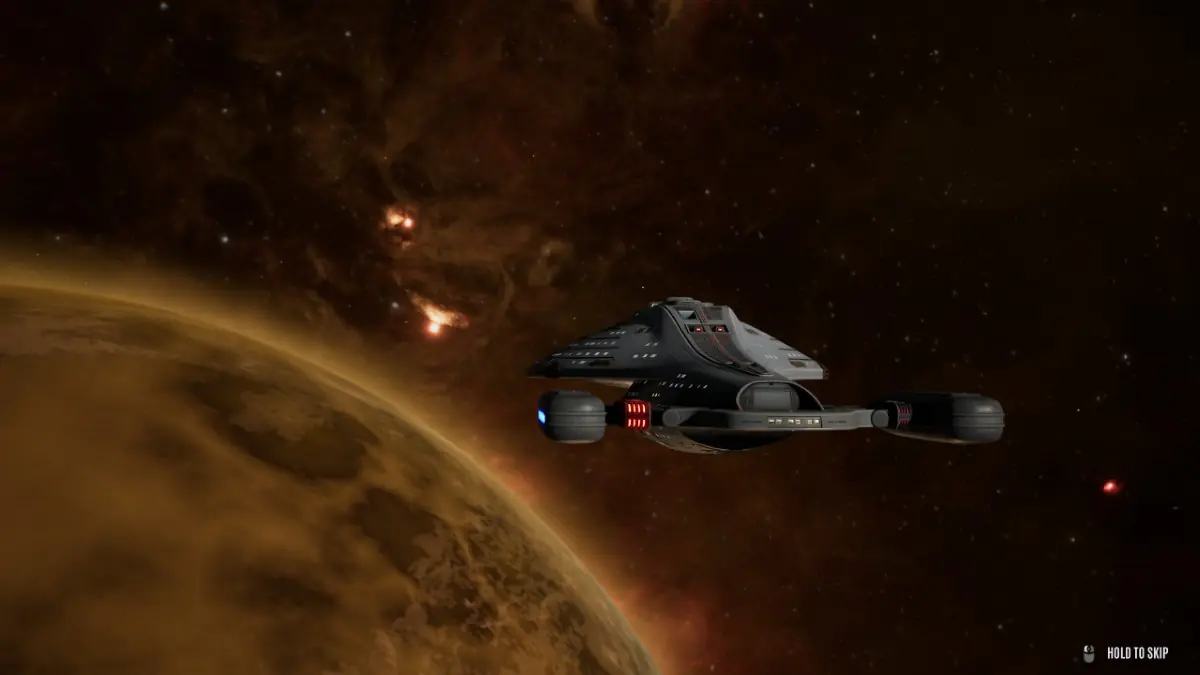
The campaign of Star Trek Voyager Across the Unknown is split across 12 chapters, each representing a different sector of the Federation-uncharted Delta Quadrant that Voyager finds itself in. Once the core quest chain in each sector has been completed then the ability to leap to the next sector and narrative chapter is unlocked.
Each sector comprises 3 to 5 systems available to warp between, and each system sports 10-20 points of interest such as planets, stranded ships, and trading stations that can be flown between and investigated. Visiting these locations is key to refilling the half-dozen resources needed to keep the ship flying and the crew taken care of. Each presents the player with a handful of options about how to engage with and exploit them, with the availability of many options depending upon whether certain upgrades have been made to the ship, abilities researched, or prior narrative decisions made. All choices come with a degree of risk and involve a bit of luck to succeed.
For example, say you come across an abandoned mining colony. You desperately need duranium to repair Voyager’s hull. You can opt to simply take the 40 units which are laying around with a low chance of failure, but instead choose to reactivate the mine itself for the chance at gaining twice the yield. You fail, and the machinery poisons a number of the crew, sending them to your sickbay and damaging morale, and you are only able to leave with 20 duranium amidst the catastrophe.
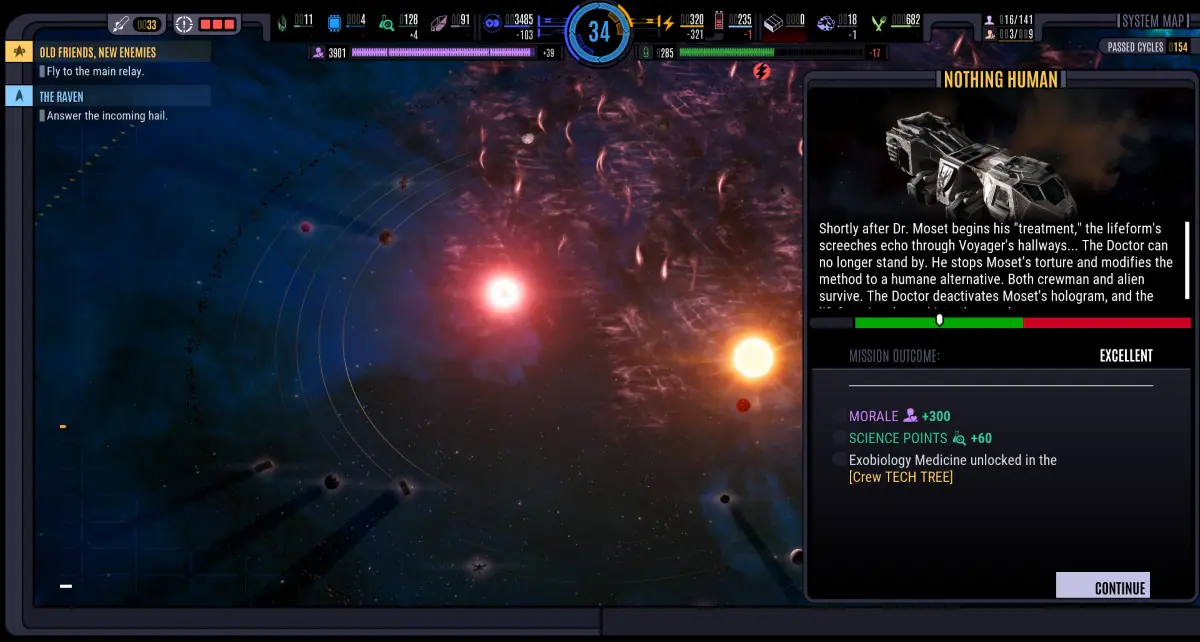
Gameplay runs on an effectively turn-based framework where all travel, research, and so on will consume a set number of cycles. Whether you actively fly somewhere or just idle for a cycle, precious deuterium is burnt which must be scavenged for replenishment also. The longer you linger in a particular sector the worse the crew’s morale will degrade too as they become increasingly anxious to get moving towards home. If morale stays at zero for too long then you’ll face a mutiny and it’s game over. Whatever state your ship, resources, and morale are in at the end of a chapter will be exactly how you begin the next one too, so there’s a real balancing act to how much you want or need to explore and exploit a given sector versus how much doing so may cost you. While there are three slots at the main menu to run separate campaigns, Star Trek Voyager Across the Unknown does not allow the player to freely save and reload, instead autosaving itself after any significant decision or step is made during a chapter. No save scumming allowed!
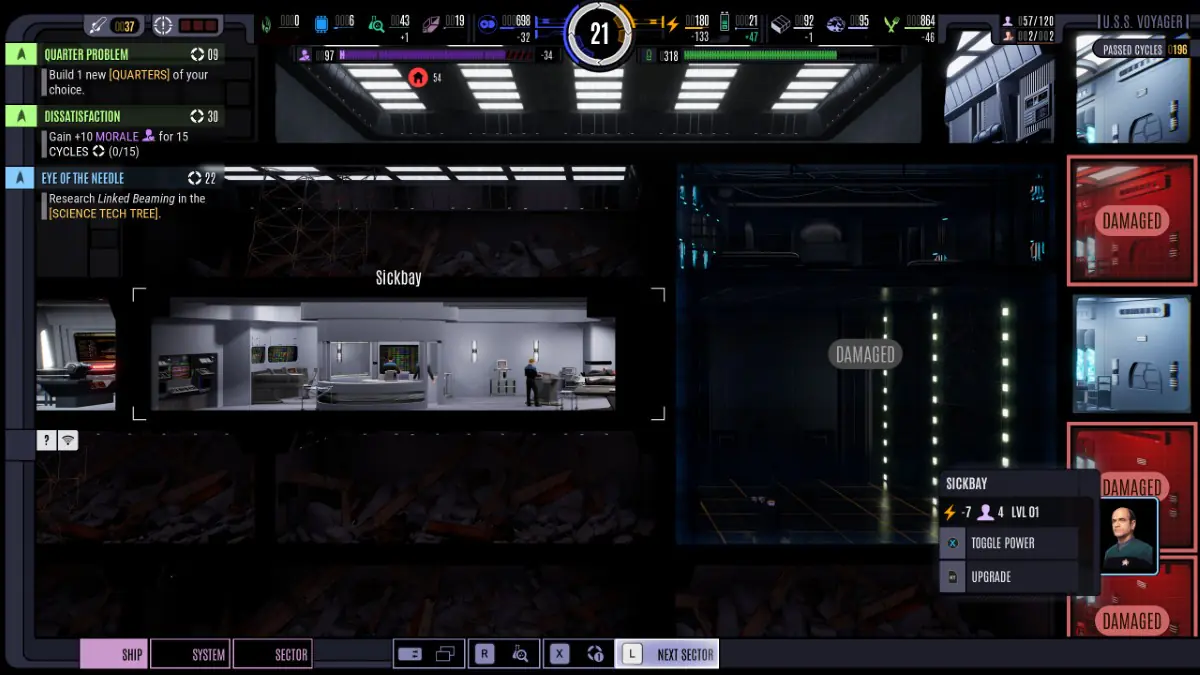
The inciting act which sends Voyager far from home to begin with also severely damages the ship, and a big part of the gameplay of Across the Unknown lies in plotting out how you wish to rebuild her. Construction takes resources and oftentimes technological research, and every room must of course be powered by the ever fuel-hungry warp core too. Want to kit Voyager out as a warship bristling with phaser control stations and shield generators? Well that may well mean not investing in nicer crew quarters or the holodeck which are vital for combatting morale decay. It may also mean not researching and building hydroponics bays to grow food, forcing you to rely more on making massively power-draining meals from the replicator stations.
The magic of Star Trek Voyager Across the Unknown flourishes within this very tension. It’s incredibly effective at making you feel the burden of command as you constantly have to make the best from a bunch of bad or risky decisions and are forced to live with the consequences.
It’s not perfect though, as while a moment of success against the odds feels like a powerfully relieving high, hitting a string of random bad luck can make you feel as if Across the Unknown is actively kicking you while you’re down. Such is the way of a gameplay loop with RNG at its core, I suppose.
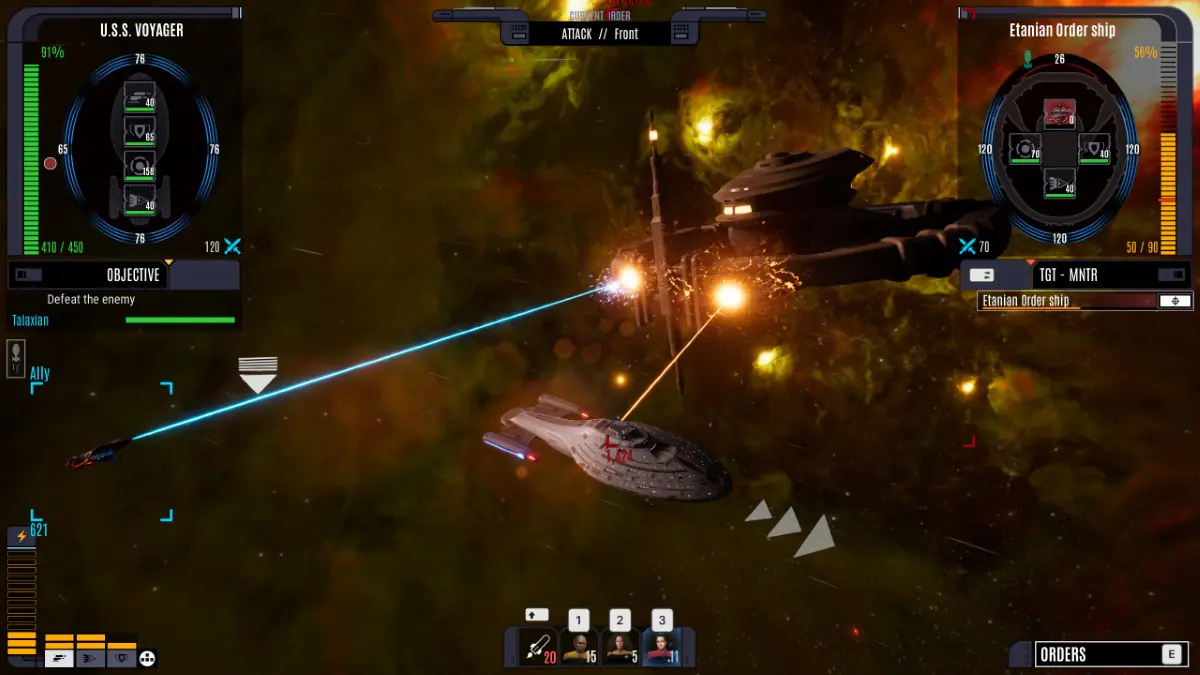
Being a Star Trek game, there are away missions and ship to ship combat too. In terms of the latter, Voyager is steered and maneuvered automatically during ship combat and the player is tasked with managing which parts of the enemy ships to specifically target, if and when to fire her finite number of torpedoes, where to direct repair efforts, what side of the ship to face away from the enemy when shields in that quadrant are penetrated. You’ll also be tasked with strategically utilising the unique abilities tied to the three hero characters you choose to slot in at the start of an encounter. It’s a system that excellently presents Star Trek ship combat both visually and mechanically, but I also found it to become a bore after about the dozenth occasion.
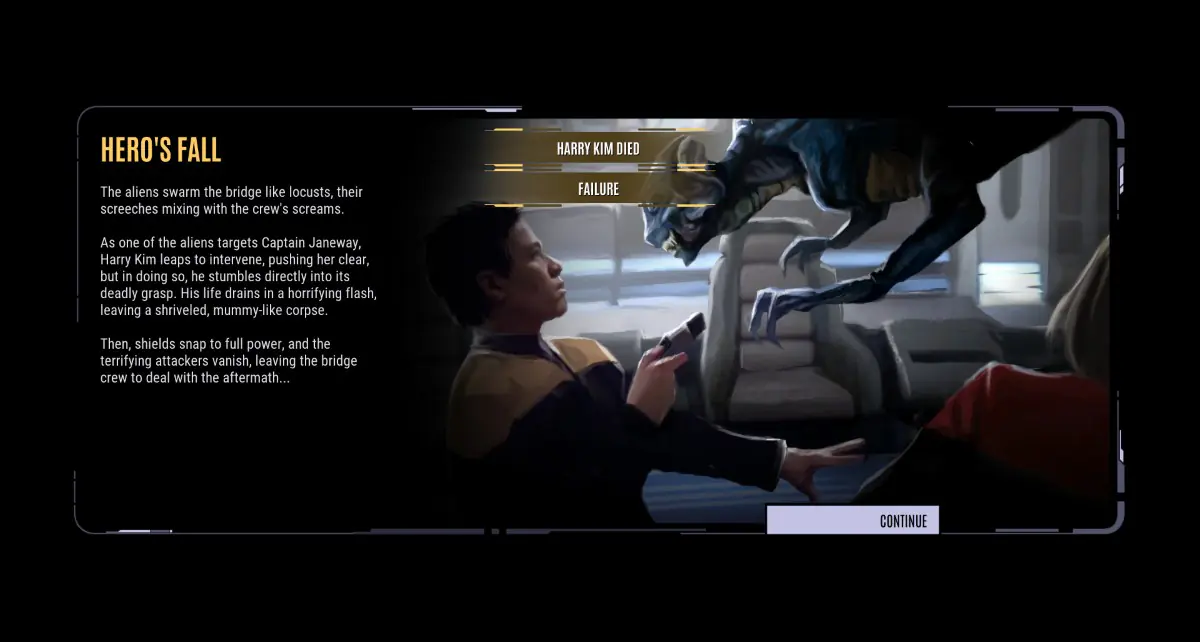
Away missions will present you with a series of three to five challenges presented in much the same manner as point of interest challenges are. The key difference here is that each are based upon skill archetypes such as engineering, medical, and security, and corresponding to those of various hero crew members such as Chakotay, Neelix, and B’Elanna. Beforehand, each mission lays out what kinds of skill challenges you’ll face at each step so you can choose what three characters to deploy accordingly. This too comes with risk as there’s every possibility that a character may die in the field.
In addition to the core questline, each sector features a couple of side-quests based upon Star Trek Voyager’s monster or problem of the week episodes. These are often where the wildly fun stuff can occur that deviates you most of all from the canon of the source material such as being able to keep Tuvix or pay off Kurros with better technology than he’s even trying to scam you for.
Star Trek Voyager Across the Unknown feels as if its ambitions could never quite be reached by its scope and budget, at least in terms of presentation. The recent addition of voice work by Tim Russ and Robert Duncan McNeill is nice, but naturally both actors sound a heck of a lot older now than they did 30 years ago when Star Trek Voyager began. Their inclusion also ends up drawing more attention to how Janeway, the ship’s captain and player character, isn’t voiced at all.
It’s a deeply compelling experience that I continue to be engrossed by even after a run of bad luck irritates me so much that I have to walk away and do something else for a while. It’s a tremendous experience on the Steam Deck despite how much the squished user interface can be a pain. It really sings when played on a large screen from a comfy chair though as it truly embodies the Star Trek captain fantasy that way.
Minor quibbles harm the embodiment of this somewhat, like how the being that flings Voyager across the stars at the very beginning is named to the player as “The Caretaker” before Janeway and the crew are actually told that it’s called that. I also howled with laughter, though, when on my very first run I chose to bully them into sending Voyager back to Earth, negating the entire game and granting me an achievement for reaching one of Star Trek Voyager Across the Unknown’s possible endings.
This is perhaps the Star Trek game most faithful to its source material, as just like Star Trek: Voyager, it’s a flawed gem that I can heartily recommend experiencing, just not without caveats. Both its greatest strength and biggest weakness is that it really feels like the kind of PC game that could’ve come out during the later years of the show’s run.
Star Trek Voyager Across the Unknown is now available on Windows PC via Steam, Xbox Series S, Xbox Series X, PS5, and Switch 2. If you’d like a second opinion on the game, you can also read Steve Wright’s thoughts over on TrekMovie.com.
Star Trek Voyager Across the Unknown was reviewed using a promotional code on Windows PC via Steam, as provided by its publisher. Click here to learn more about Stevivor’s scoring scale.
 |
Star Trek Voyager Across the Unknown19 February 2026PC PS5 Switch 2 Xbox Series S & X
|
This article may contain affiliate links, meaning we could earn a small commission if you click-through and make a purchase. Stevivor is an independent outlet and our journalism is in no way influenced by any advertiser or commercial initiative.