




It’s been a while since the last Monster Hunter Stories game – though the first two did get an upgraded re-release on all consoles in recently – and Capcom has returned to the series with gusto. Bringing a level of vibrant colour that I thought was illegal in the RE Engine, Monster Hunter Stories 3 Twisted Reflection once again asks the question, “What if we could all just be friends (and then fight other people)?”
Much like the previous titles in this subseries, Monster Hunter Stories 3 presents a world where the various monsters of the flagship series aren’t just for hunting. They’re also for friendship! Riders are people who form a friendly bond of cooperation with their Monsties, using the power of Kinship stones to fight and act in unison with their partners.
Opening in the kingdom of Azuria, Stories 3 sees you take on the role of the Crown Prince or Princess of the kingdom, as well as captain of the Rangers – a team focused on preserving and restoring the local monster ecology in the face of an incumbent natural disaster. The Crystal Encroachment is some unknown imbalance in nature, causing plants, animals and monsters alike to turn into crystal. The Rangers make it their duty to find crystallised monster eggs from the distant past to restore endangered or extinct monsters, fighting back against the ongoing scourge. At the same time, Azuria and the neighbouring country of Vermeil struggle to maintain peace as natural resources are destroyed by the Encroachment, leading to rumblings that Vermeil may make a hostile move any day. It’s a much more serious tone than the previous Stories games have pursued, but it acts as a great driving force for the game’s many (many) systems.
At its core, Twisted Reflection returns to the mechanics that made the previous two games so fun. You’ll spend much of your time fighting monsters in the wild for monster parts, as well as retrieving new monster eggs from dens that pop up randomly across every map. Every monster you hatch has a different set of ‘genes’, or skills in a 3×3 grid, which affect what attacks or stat boosts that particular Monstie receives. You’ll eventually gain access to a mechanic that lets you freely swap genes from one Monstie to another, optimising their skill sets and activating bonuses for lines of matching skill types in the grid. While in the previous titles, this Rite of Channeling would consume the donating Monstie – always a pretty disturbing implication, to be honest – here you can freely swap genes back and forth without anyone needing to be “consumed”. I found it was a great way to encourage catching a bunch of each monster type, both to hatch one with a high letter rank, AND stockpile useful skills to transfer to other Monsties I’m using in my party.
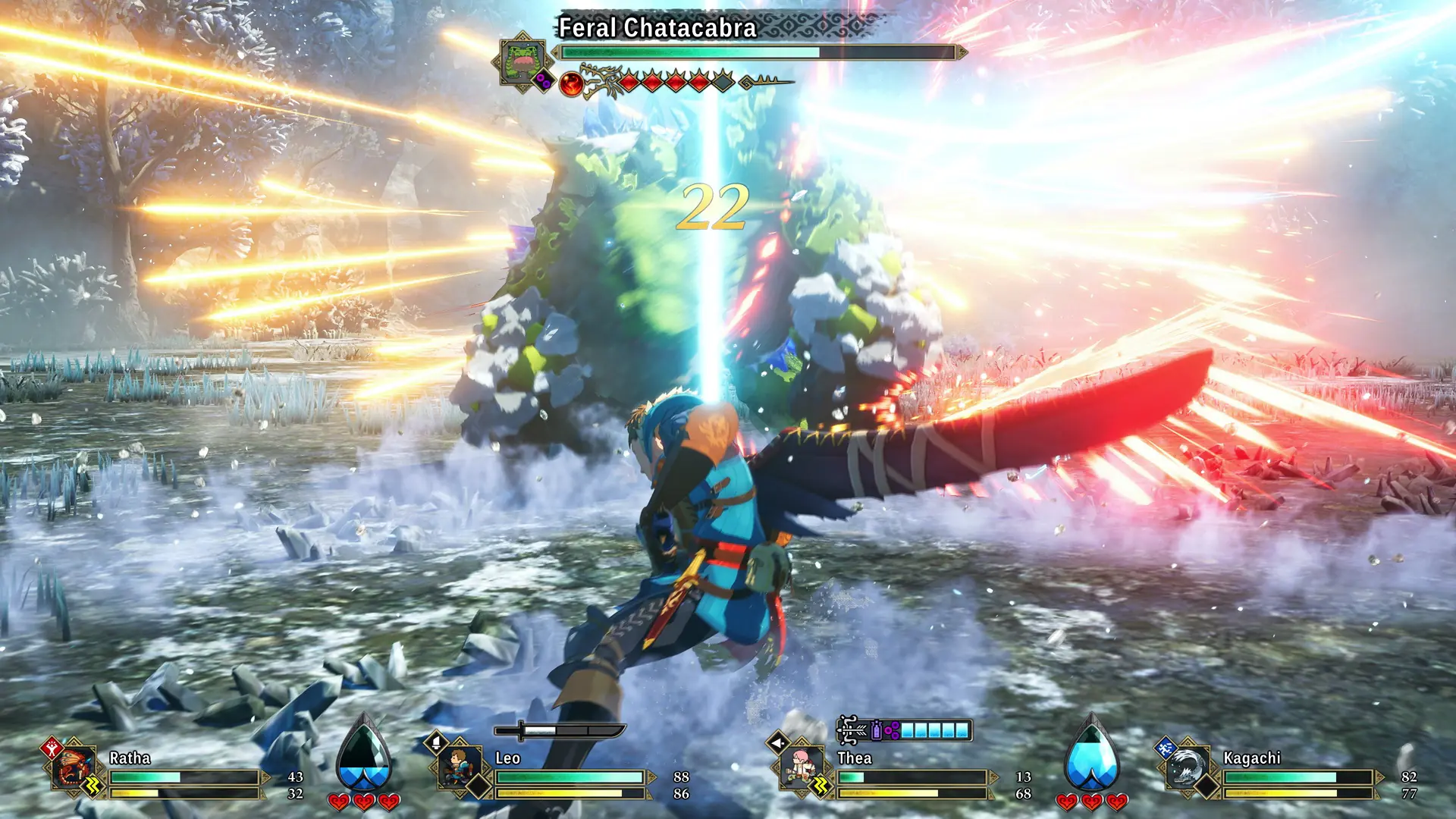
Combat retains the same juice that made Stories such a draw to begin with, all revolving around the battle system’s rock-paper-scissors mechanic. Your attacks all have a type (Power, Speed or Technical), each of which is strong against one of the others. Monsters in the wild also have an inherent typing, which influences the attack types they’ll use; go head-to-head with a type advantage, and you’ll knock your opponent’s attack away entirely. Your Ranger Captain and his friends also have typed weapons taken from the weapon selection in core Monster Hunter games (Slashing, Piercing or Striking) which are each suited to attacking certain parts of the monster too, allowing you to “break” them to weaken your opponent or stop their attacks in their tracks. The newly added Wyvernsoul gauge also allows you to chip away and stagger an enemy, opening them up to a powerful Synchro Strike from your entire party. While it’s a lot to juggle all at once, you do eventually settle into a rhythm with the combat – and there’s no penalty if you do lose a fight, which makes the trial and error nature of combat feel more intentional. As a bonus, I also love the “Quick Finish” option that opens up once you’re high enough level, letting you instant-win any battle against a monster you’ve fought before – and at an S-rank completion by default, giving you the maximum experience and materials for the fight. Given how slowly each fight can play out, it’s a welcome reward to be able to power through repeat encounters, and quickly gather materials you might need for a weapon or armour upgrade.
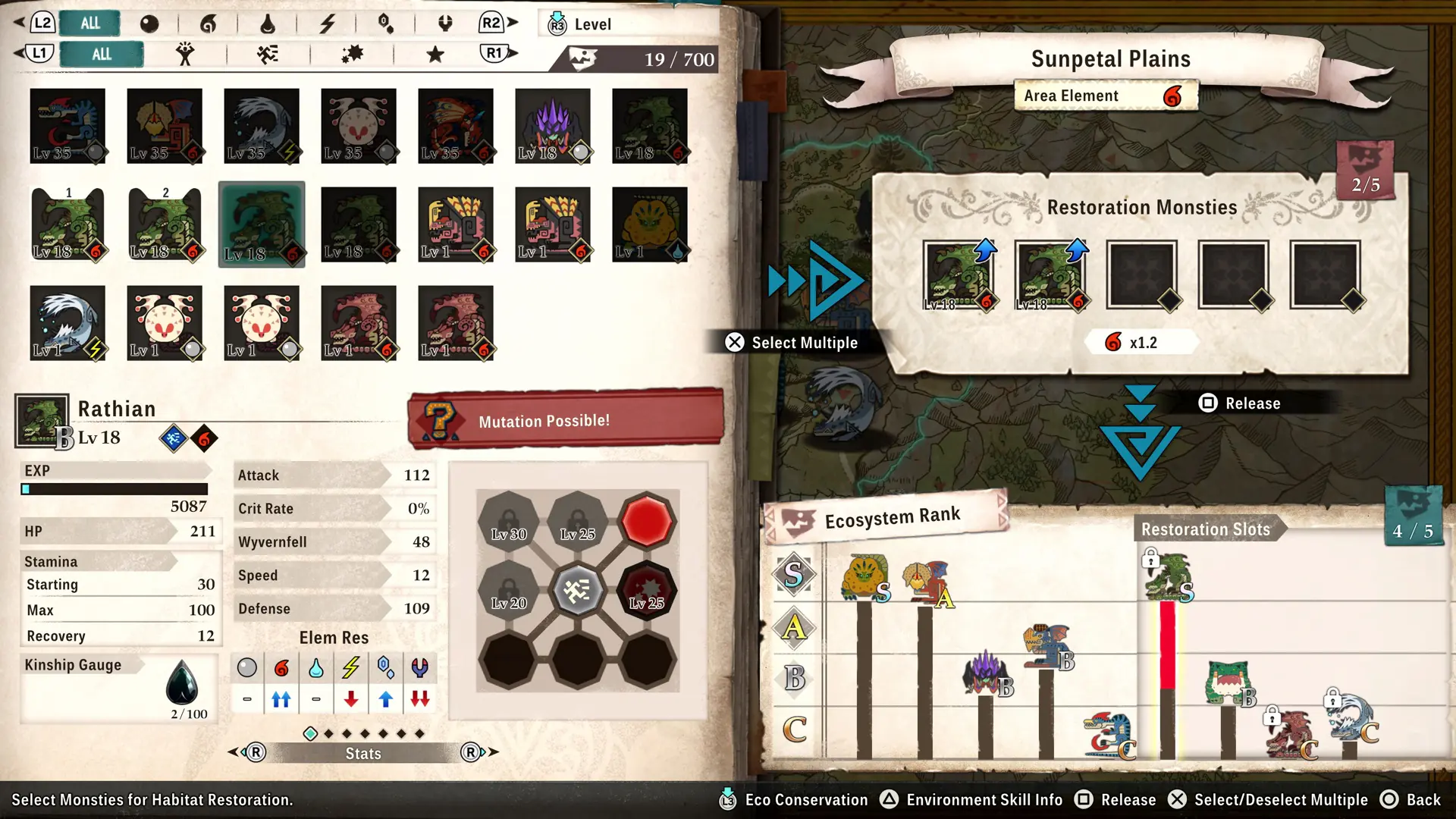
Across the board, Monster Hunter Stories 3 is all about adding new layers to the game. You’ll encounter feral monsters camping out in key locations across each area, driven crazy by the Crystal Encroachment starting to affect their bodies. Take one down and you’ll open up a new camp location for the Rangers – both to give you access to tools like your Monstie stable and the weapons forge, as well as allowing you to work on Habitat Restoration. Releasing Monsties back into the wild in each region can improve their ecology rank – and the quality of eggs you’ll find – with each you release. It’s all part of the loop of collecting and hatching eggs from every den you find; hatch the egg, harvest any useful genes or higher rank Monsties, and then release them into the wild to improve what you’ll find next time. The game is extremely generous with how many Monsties you can have on hand at any time, but this still allows you not to be too precious with what you catch or keep, and encourages you to mix up your lineup as you meet new Monstie types.
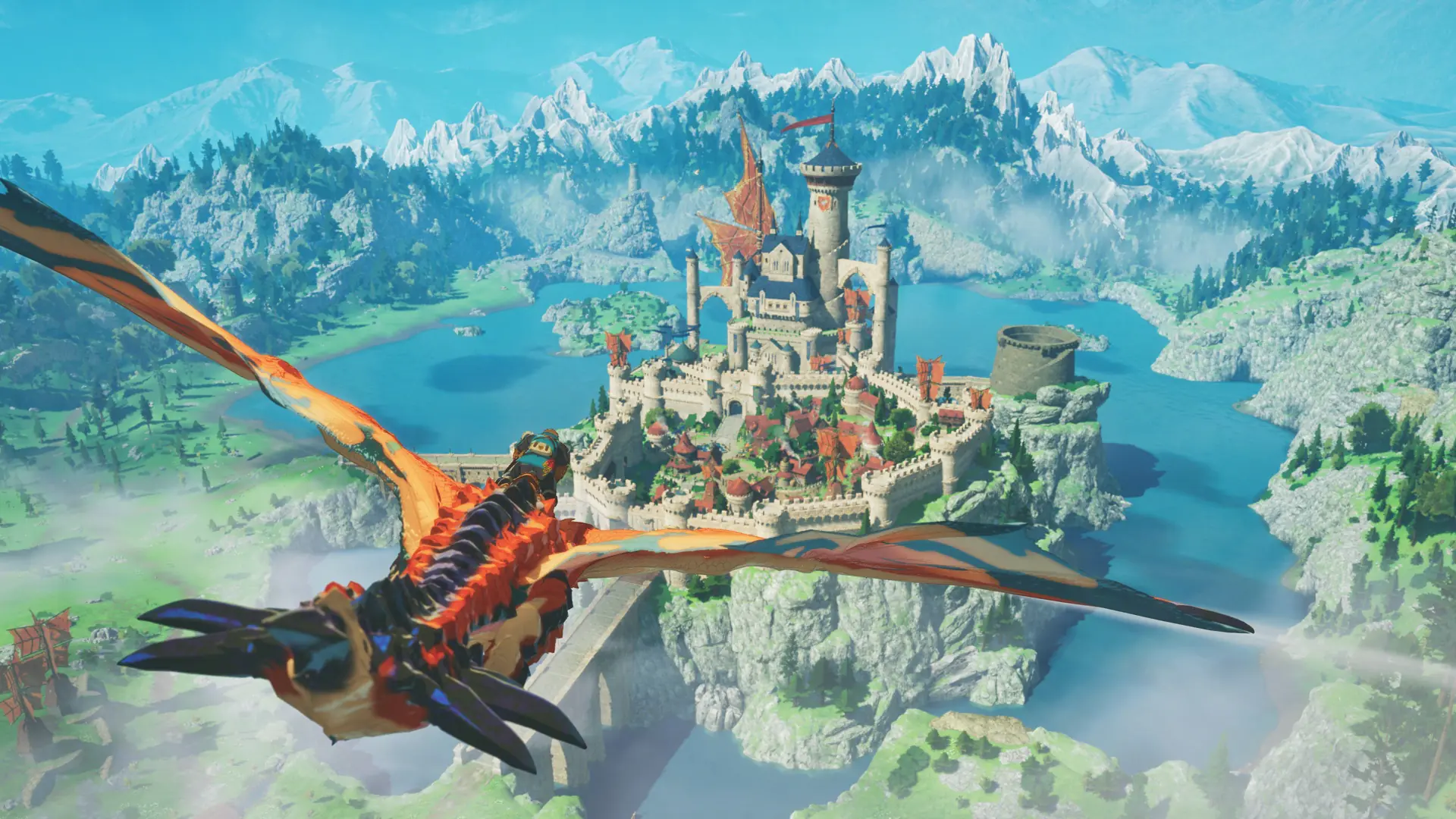
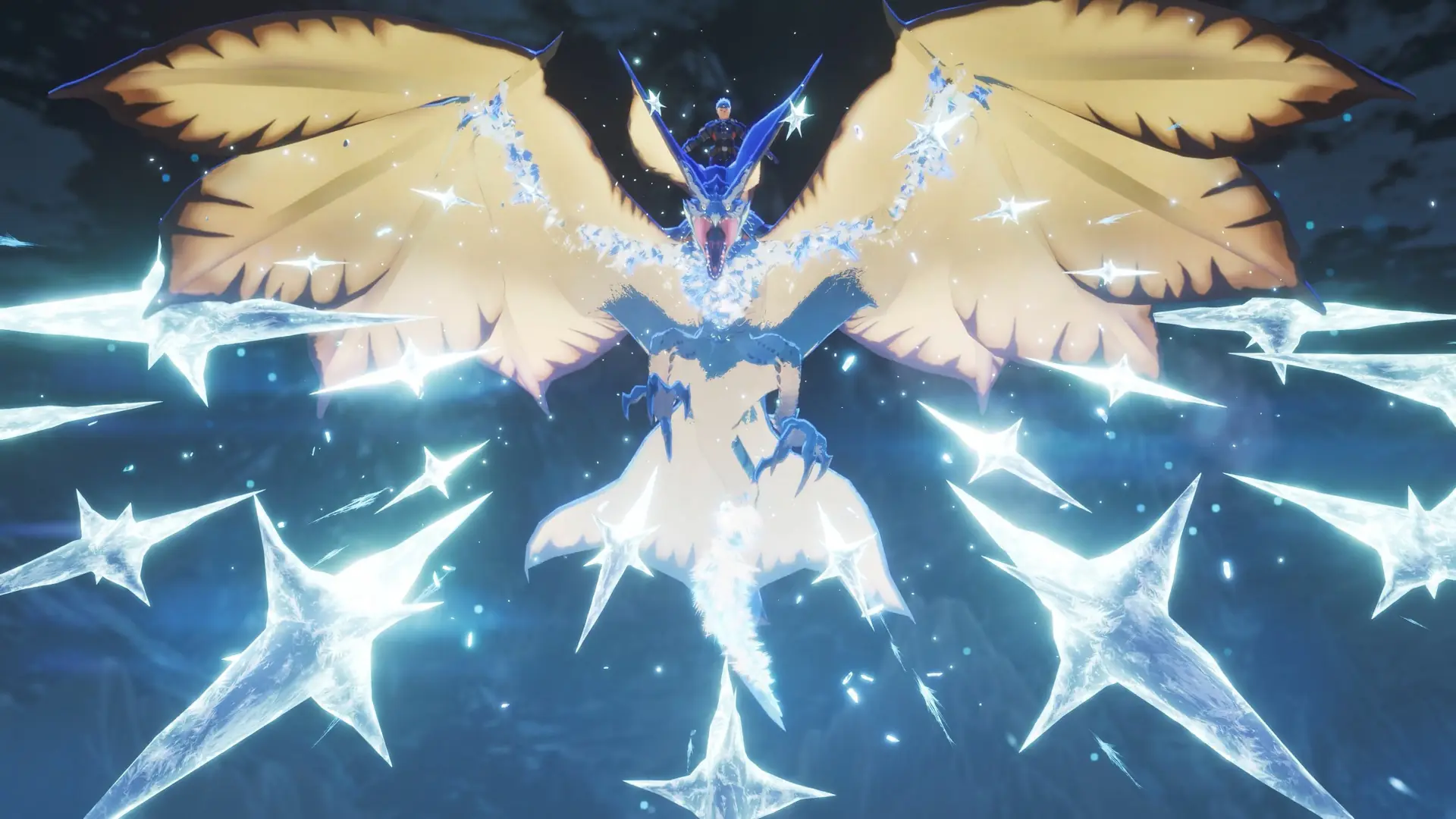
The same carries through to Twisted Reflection’s environments, with each one packed full of paths that can only be accessed by a Monstie with particular traversal skills – you’ll need to keep Monsties on hand that can swim, fly, dig and climb if you want to see everything each beautiful region has to offer. Each of these massive open maps is rich in detail in a way that the older 3DS titles could only imply – the lighting and weather effects take full advantage of the power that Capcom’s RE Engine can offer, from deserts and forests to every other biome you can dream of. The spectacle in battles has also been dialled up to eleven, with your Kinship special moves in particular going all-out on spectacle in the most ridiculously fun way.
At the end of the day, Monster Hunter Stories 3 is a game that wants you to spend a LOT of time playing it – but it respects that time also. Much like the mainline Monster Hunter series, Stories wants you to spend time thinking about and preparing your loadout before each big fight, fighting and crafting and hatching your way to the right configuration. Battles themselves also take strategy and forethought, making sure you memorise a monster’s patterns and weaknesses to come out victorious. But, once you’ve proved you can do that? It’s all about making life easy for you, rewarding that time you invested. With so many different systems at play, it’s almost a relief to be able to Quick Finish a battle, or easily search for a gene I want my favourite beast to have; I’m keento see what’s in store next, and Stories 3 is excited to show it to me.
Monster Hunter Stories 3 Twisted Reflection heads to Windows PC via Steam, Xbox Series S, Xbox Series X, PS5, and Switch 2 from 13 March.
Monster Hunter Stories 3: Twisted Reflection was reviewed using a promotional code on PS5, as provided by the publisher. Click here to learn more about Stevivor’s scoring scale.
 |
Monster Hunter Stories 3 Twisted Reflection13 March 2026PC PS5 Switch 2 Xbox Series S & X
|
This article may contain affiliate links, meaning we could earn a small commission if you click-through and make a purchase. Stevivor is an independent outlet and our journalism is in no way influenced by any advertiser or commercial initiative.