







It's a decent game, but I won't keep playing it.
The Division Resurgence is a competent game, but it’s nonetheless played on a mobile phone; at the end of the day, that’s enough for me to not want to continue playing. As I type this, I’ve never felt more ancient at any point in my entire life.
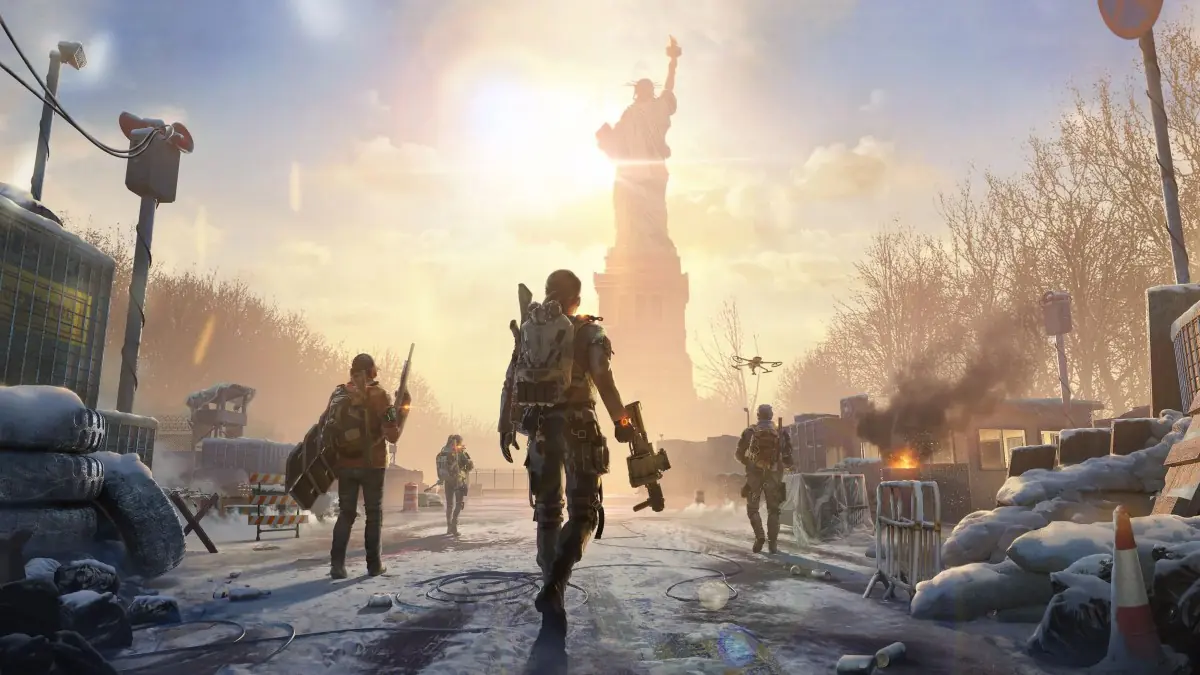
Set in The Division‘s post-apocalyptic version of Manhattan, Resurgence is a free-to-play mobile game that slots in between the original and The Division 2. Players will fill the shoes of a new agent, tasked to protect citizens and take on the evil factions that seek to fill a power vacuum left by a deadly virus. In short, Resurgence looks like The Division, sounds like The Division, and that’s perhaps half the battle right there.
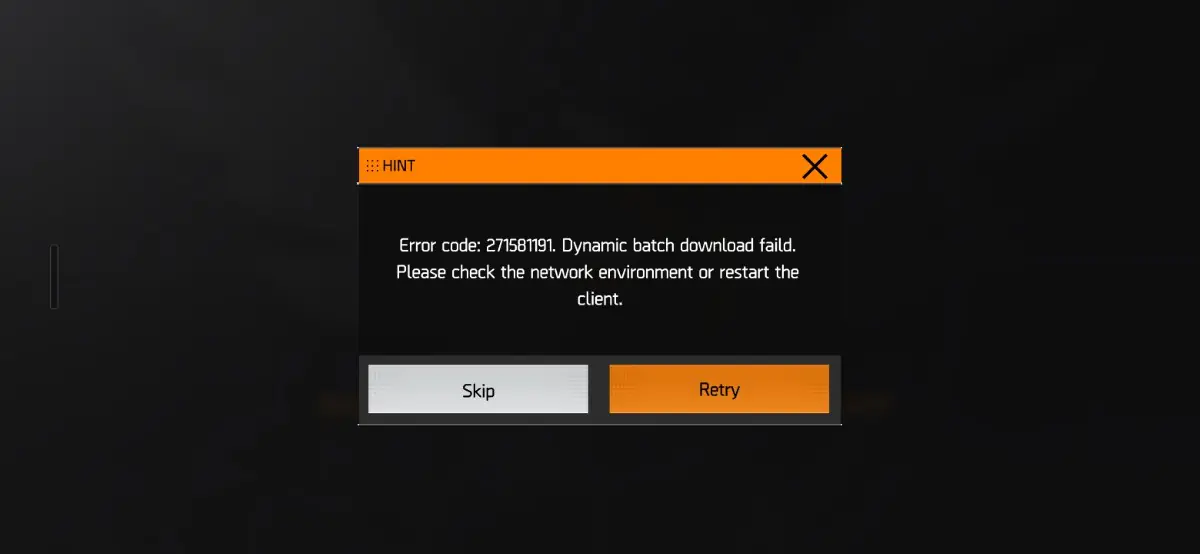
But then again, it’s a mobile game. It’s close to a 2GB download on Android alone, and what’s without firing it up to find it’ll download about that same amount again before you can actually play. I struggled to download that second component in the background, meaning I had to wait until I was on a wi-fi network and then download the content while locked into the app. That also meant I couldn’t use my phone for the other million things I depend on it for.
At its core, Resurgence plays with mostly solid on-screen touch controls. Mirroring an experience on controller, your left thumb will move your character, while your right thumb will do everything else: controlling the camera, getting you into cover, using special abilities, actually firing your weapons, and more. With automatic weaponry, you slide your thumb over to the fire button, hold it, and then move left and right to continue aiming and firing; with a sniper rifle, you hold to zoom your scope in, then move to position your shot before removing your thumb from the screen to actually fire.
At long distances, firing works very well; in close-quarters though, I couldn’t hold and swipe my thumb in large enough swathes to actually track opponents. I also had some difficulties instinctively switching between firing, grenades, special abilities, and camera movement without having to look away from the action and directly to the sections of my mobile that I needed to focus on.
One solution, of course, is to pair a Bluetooth controller or a Backbone to your phone and actually play Resurgence using proper controls. I opted not to do that, because I’d honestly rather play The Division 1 or The Division 2 if I was going to go to those lengths. And I’d be doing that on a device I have dedicated to playing video games, not scrolling Reddit, or answering Teams chats, or whatever else too.
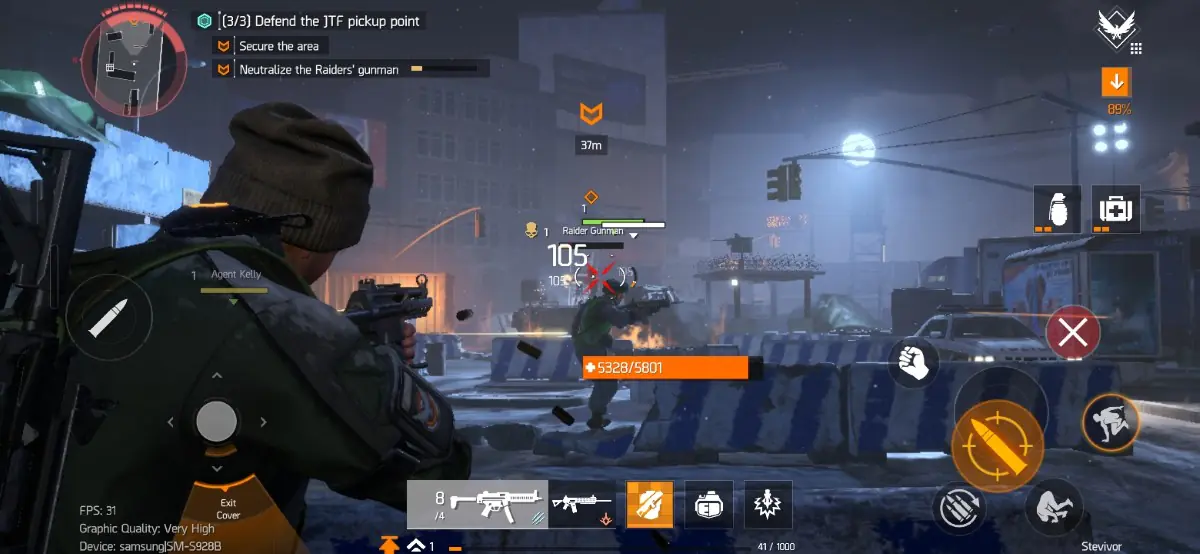
Playing in a pre-release window, I wasn’t able to access Resurgence‘s PvE component with other players, instead heading into Manhattan as a solo SHD agent. Mobile gripes aside, Resurgence is great fun, and looks, feels, and plays like The Division. True to it being just like its bigger brothers, but on mobile, Resurgence also offers PvPvE Dark Zone action — and it’s here that I wonder if those who do opt to use a Bluetooth controller will have a profound advantage against those who do not.
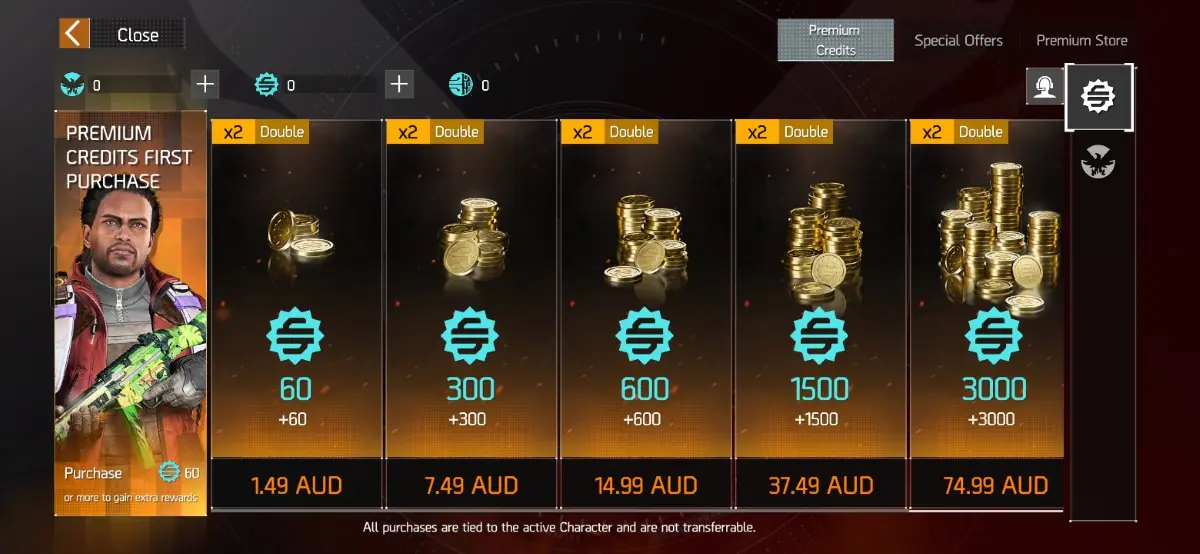
While it is more actual video game than a mobile game pretending to be something bigger (I’m looking at you here, gatcha-style Resident Evil Survival Unit), some of the latter category’s trappings have filtered through into Resurgence; for instance, I was greeted by a daily login rewards screen after subsequent days of play. It also sneaks into microtransactions, with Resurgence‘s free-to-play setup offering players a bonus set of credits the first time they shell out cash for cosmetics.
The smallest of Resurgence‘s in-game credits purchases will set Aussies back $1.49 AUD for 120 credits at the first purchase, or 60 otherwise, while 6,000 initial credits will set you back $74.99 AUD, otherwise 3,000 at another dip. In terms of what you’ll get for that, one apparel set in the store was priced at 750 credits (so a $14.99 AUD initial credit purchase or $37.49 AUD otherwise), with another at 1150 (the same $14.99 AUD initial credit purchase or $37.49 AUD otherwise). Weapon skin packs were a bit pricier, coming in at 1,800 credits (or a $37.49 AUD initial credit purchase, or $74.99 AUD otherwise). It’s not hard to see how these (optional) purchases could start to break someone’s bank.
Close to my mid-forties, I know I’m an old fart. I know that my far younger nephew will happily play mobile games of varying quality until he drains his entire battery. I also know that Resurgence is the closest thing to an actual video game on a mobile that I’ve seen. That still doesn’t make me want to continue playing.
If anything, Resurgence has reminded me that I really enjoy The Division; it makes me a bit sad that it got the go-ahead while The Division Heartland, a free-to-play console entry, was cancelled. Alas, I still have The Division 1 and The Division 2 on console or PC if I want to dip my toe back into this world, so maybe having some choice is a good thing.
The Division Resurgence is a free-to-play third-person RPG, available now on iOS and Android devices. Clear some storage, download it, and jump on in if you think it could pique your interest.
The Division Resurgence was previewed using a promotional code on Android, provided by the publisher.
This article may contain affiliate links, meaning we could earn a small commission if you click-through and make a purchase. Stevivor is an independent outlet and our journalism is in no way influenced by any advertiser or commercial initiative.