









ShieldGuard and MouseTrap, detailed (and evaluated).
It should come as no surprise to hear that Rainbow Six Siege has historically had a severe cheating problem. A casual glance at Reddit threads or Twitter trends over the past couple of years unearths a disturbing amount of players sharing their game-ruining experiences. Heck, the whole game itself had to be taken offline not once, but twice over the holiday period as hackers cracked it wide open.
Anecdotally, the last time I reinstalled and chased a hit of what was once my favourite competitive FPS I only lasted three games before I uninstalled again. Two out of those three matches were ruined by blatant hacking, the third by the game’s toxic community.
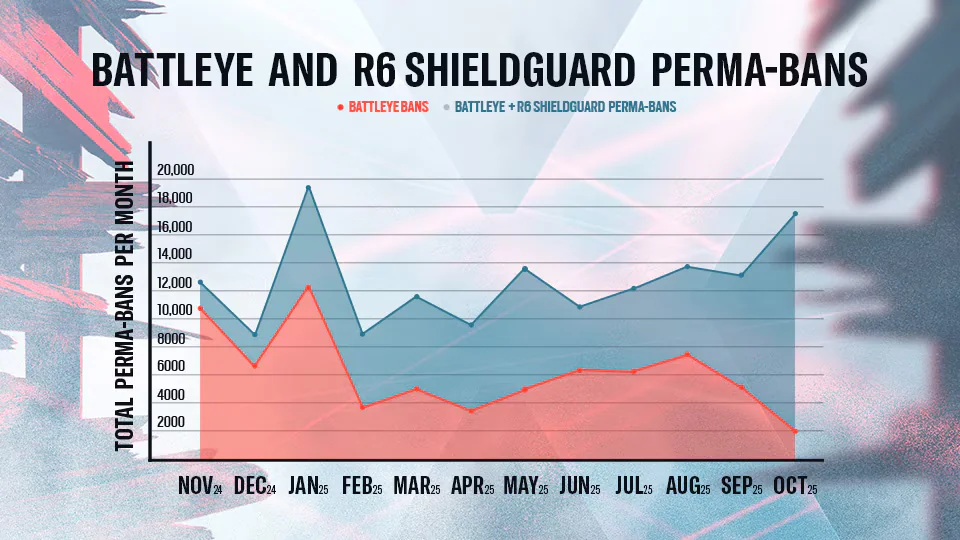
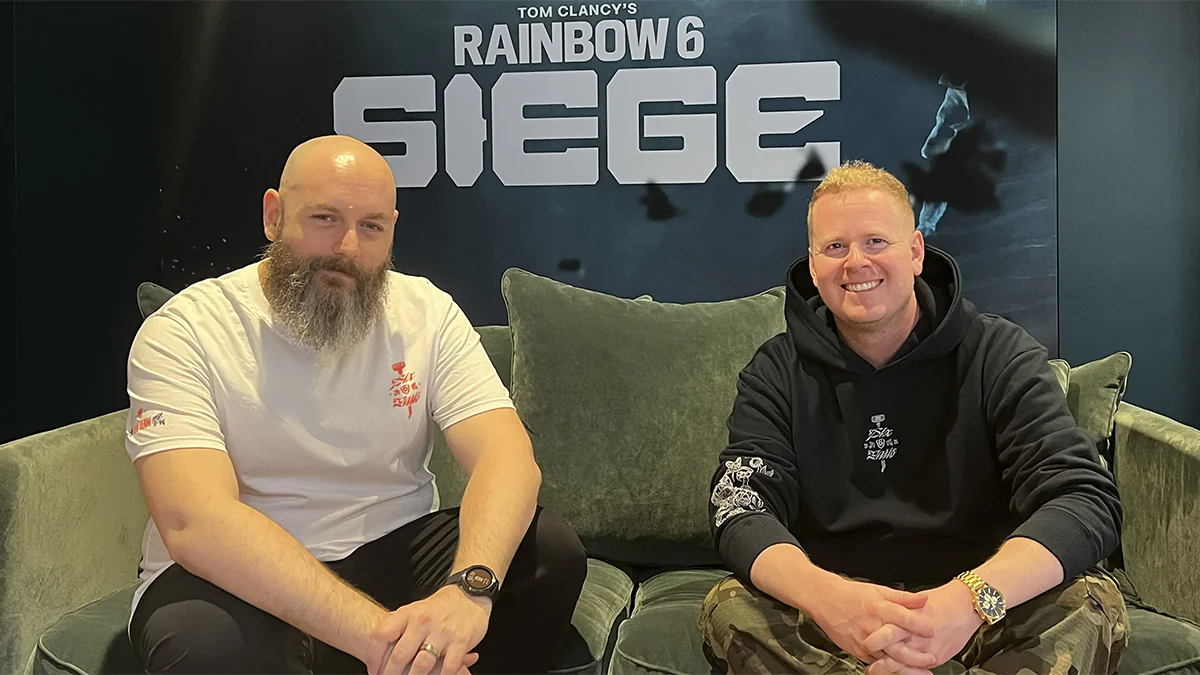
Rainbow Six Siege’s Year 10 Season 3 update saw the introduction of ShieldGuard – phase 1 in Ubisoft’s plan to curb the epidemic facing the Siege player base. Now, in Year 11, Live Content Director Christopher Budgen sat down with Stevivor to talk about how the he and his team are looking to cut cheat engines off at the source.
“We’re adding what’s called R6 ShieldGuard Secure Platform. That’s bringing new tools, such as secure boot, into the environment – something we don’t currently have,” Budgen said.
For those who don’t know, secure boot is a Windows feature that prevents untrusted software from loading during the start up process. It’s currently used in other titles such as Battlefield 6 and Valorant to prevent cheats from being able to start, let alone run, and now Siege is making it a requirement to access their newly minted Legend Division.
“If you want to be able participate in the Legend Division, your PC’s gonna have to be able to support that,” Budgen said. “That means that some cheats won’t even be able to boot, and that will be a deterrent for many different cheat providers.
“That’s really how this game works, we have cheat providers that we target and fight up against, and this is gonna be one additional aspect that they have to try to consider if they want to support Rainbow Six Siege, which, obviously, we don’t want them to support.”
Of course it’s never as straightforward as that, and many cheat providers are happy to take on the challenge. This creates an almost cat and mouse like dynamic for the developers, as the cheat providers try to stay one step ahead and, occasionally, fall for a well-placed bait.
“It’s very dynamic, to be honest,” said Budgen, speaking of the ongoing fight against the cheat providers. “We know all the different cheat providers that are currently within Siege. We have them rated. We know if they’re what we call tier 1 or tier 2, tier 3 different cheat provider. And we ultimately just try to go after the biggest one, the biggest threat.
“You saw that actually in Season 4. We had a cheat provider that targeted our release. Cheating was really bad for the first week and, after that, we specifically targeted that cheat provider, and we’ve seen huge gains throughout the season. We’re actually having the lowest amount of cheaters since the launch of Siege X, right now in Year 10 Season 4, and we hope to carry that forward into Year 11.”
While some cheating is obvious, such as ungodly aim or rage hacking, other times it can be more insidious and harder to detect. One of those ways that’s seen a lot of action with in Siege is players using a mouse and keyboard spoofed as a controller while playing on console, giving them far greater accuracy than your average console player could achieve.
Enter MouseTrap, Siege’s tool designed to fight this type input spoofing. “Previously, in Year 9 Season 4, we added cross platform play where you can matchmake PC and console,” Budgen said. “With that, we brought the addition that MouseTrap players were gonna be moved to the PC pool.
“Now we’ve sat on that for the year, but at the same time we’ve had some reflection on our overall MouseTrap tech. We know that there’s physical devices that people are plugging into their consoles, and they have their own communities that are developing macros to try to bypass our MouseTrap systems. We’re aware of that, and we also know about which macros are actually working, so we’re updating our MouseTrap systems to fight that fight as well, and we’re really committed to maintaining that.”
Historically Ubisoft have been rather lenient towards these players, but that ends in Year 11.
“We’re now saying, this is cheating. And if you have three strikes, instead of going to the PC pool, you will now be banned from the game,” said Budgen.
It’s great to see Ubisoft is taking large strides towards cutting down on cheating, but it’s undeniable that some severe reputational damage has already been done. With the game’s population around half of what it was when it hit an all-time peak close to two years ago (going off data from SteamDB), it’s hard to believe that this alone will be the cure-all to revitalise the local player base.
What is clear though is that the game is in good hands, and its developers are dedicated to charting a course to competitive integrity. Here’s hoping the local scene can recover along with it.
Rainbow Six Siege is currently available on Windows PC, Xbox One, Xbox Series S, Xbox Series X, PS4, and PS5. Snake goes live with Year 11 Season 1 on 3 March 2026.
 |
Rainbow Six Siege1 December 2015PC PS4 PS5 Xbox One Xbox Series S & X
|
Hamish Lindsay travelled to Paris, France in order to cover Rainbow Six Siege. Travel and accommodation were paid for by Ubisoft.
Editor’s note: We have amended this article to clarify data on estimated player counts, and apologise for previous inconveniences.
This article may contain affiliate links, meaning we could earn a small commission if you click-through and make a purchase. Stevivor is an independent outlet and our journalism is in no way influenced by any advertiser or commercial initiative.